After BitMart announced its orderly shutdown on July 26, an increasing number of users have reported issues in recent days, including withdrawal difficulties, delayed withdrawals, abnormal account balances, and unresponsive customer support.
On July 30, affected BitMart users with significant asset exposure established a joint communication group and completed an initial registration process. According to the preliminary records, 27 users reported being unable to withdraw their funds normally, with total affected assets reaching approximately 3,704,214 USDT.
The largest reported individual asset amount reached 700,000 USDT, while several other users reported account balances ranging from 100,000 USDT to 600,000 USDT.
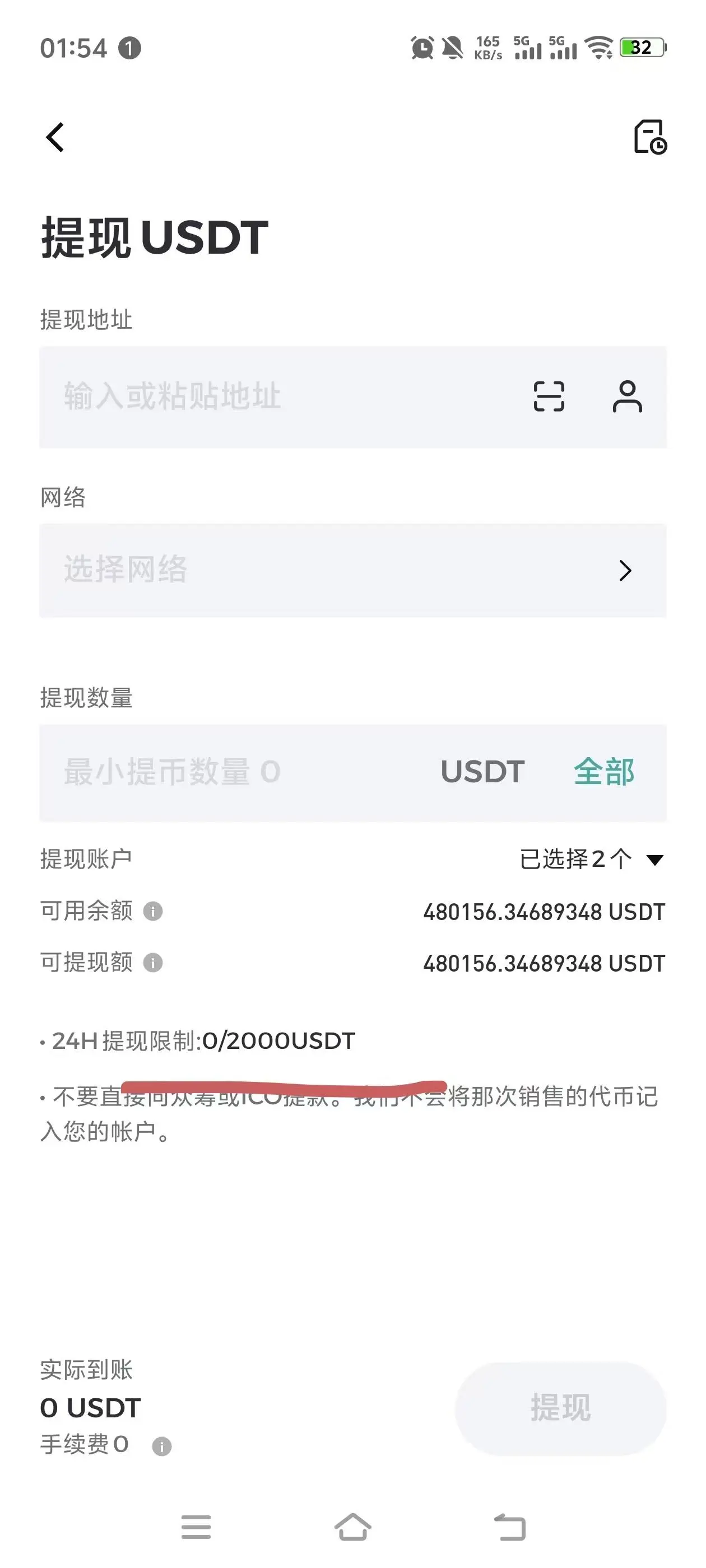
Screenshots from the original accounts of just seven users showed a combined balance of 1,692,203.67 USDT.
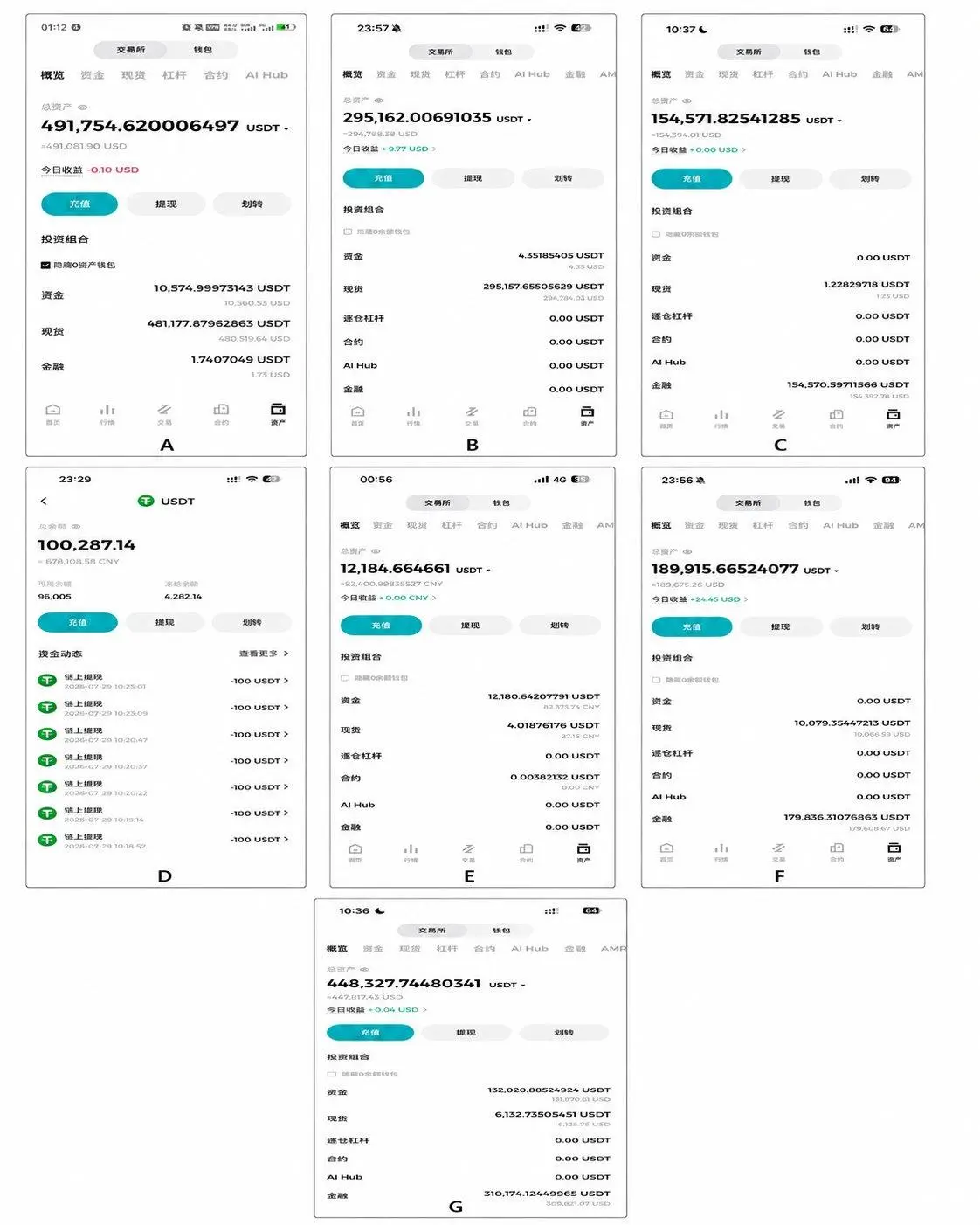
Screenshot of BitMart Users Unable to Withdraw Funds (Source: @MINGLIbtc)
Centralized exchanges (CEXs) play a critical role in custodying user assets, facilitating trades, and providing withdrawal services. However, over the past few years, the crypto industry has witnessed multiple exchange risk events. From the collapse of major exchanges to withdrawal difficulties faced by smaller platforms, ordinary users are often the ones who suffer the greatest impact in the end.
When such incidents continue to occur, how can users better protect their asset rights and interests?
BitMart Shutdown: $3.7 Million in User Assets Reportedly Affected — Are Your Funds Safe on Exchanges?
After BitMart announced its orderly shutdown of platform operations, withdrawal issues quickly became the focus of user attention.
Around July 30, according to preliminary user registrations, 27 users reported being unable to withdraw their funds normally, with total affected assets reaching approximately $3.7 million USDT.
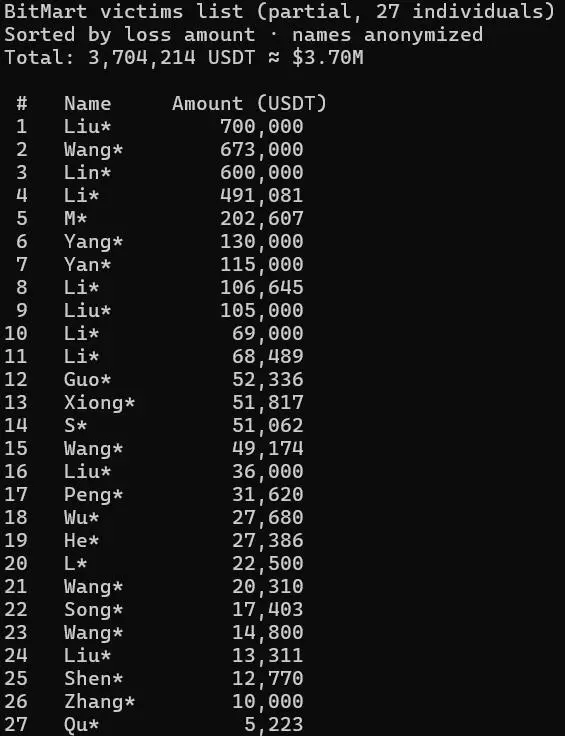
Statistics of BitMart Users with Significant Assets Affected (Source: @MINGLIbtc)
Many large-volume users were attracted to BitMart by its stablecoin investment products, such as USDG and PYUSD financial products. However, when they attempted to withdraw their funds, they found that the available exit channels were disappearing one after another.
Some users have preserved direct screenshots from the BitMart app as evidence. On the “Withdraw USDG” page, both available networks — ETH (ERC20) and SOL (Solana) — were shown as “Suspended.”
This is not simply a case of slow withdrawals or blockchain network congestion. Instead, it indicates that all available withdrawal channels for USDG had effectively been disabled.
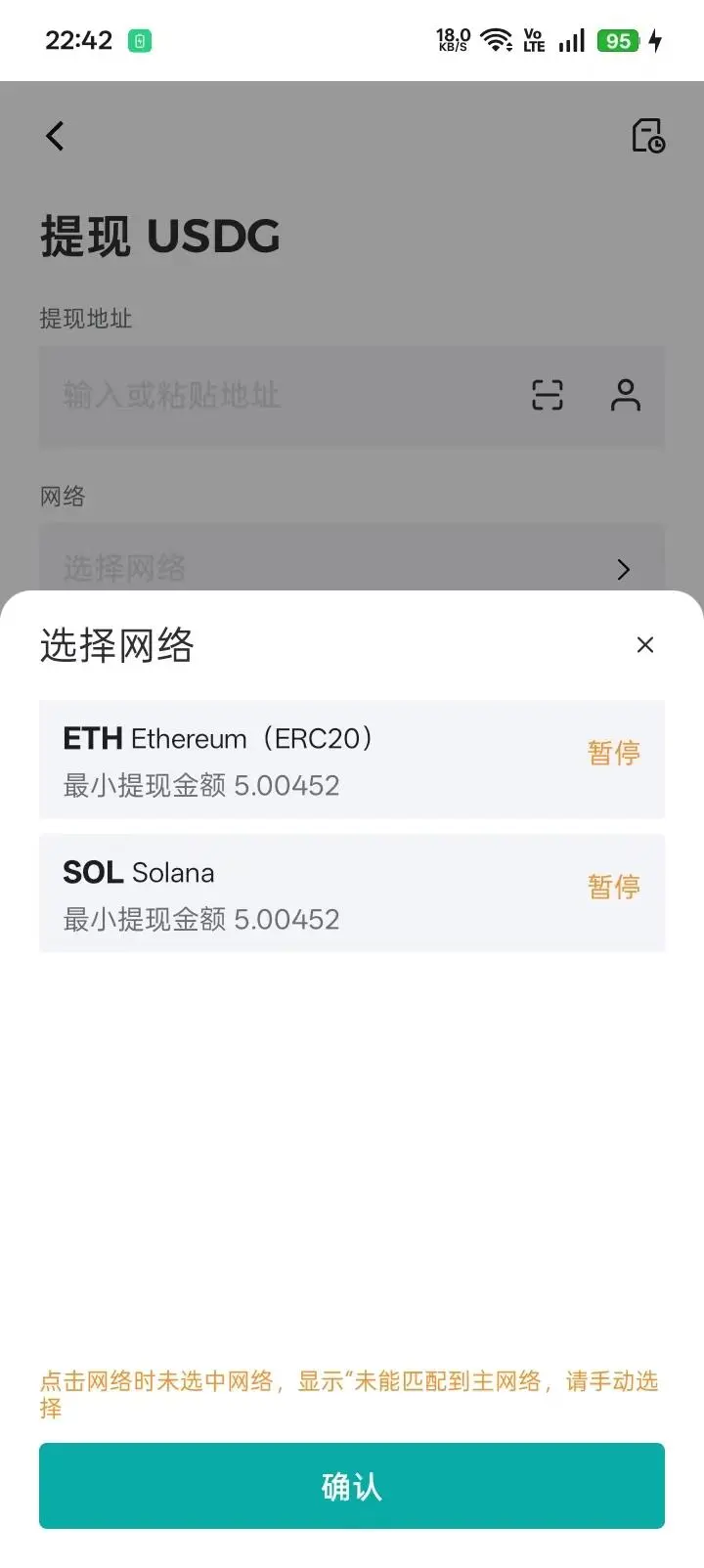
BitMart Withdrawal Page
At the same time, some small withdrawals were occasionally processed. However, for users holding assets worth $100,000, $200,000, or even hundreds of thousands of dollars, being forced to repeatedly attempt withdrawals of only 100 USDT per transaction cannot be considered a normal withdrawal process.
From an on-chain perspective, data tracked by Lookonchain showed that within 24 hours after the shutdown announcement, only 58 wallets had successfully withdrawn a combined amount of approximately $805,000 in assets. During this period, there was even an interval of nearly eight consecutive hours without any significant processing progress.
The platform stated that withdrawals were “still available,” but warned that users might face additional compliance and security checks. The problem is that, from a users perspective, a functionally frozen withdrawal system and a verbally “available” withdrawal system make no meaningful difference.
BitMarts situation is not an isolated case. BitMEX also announced plans to shut down its exchange operations in September 2023. Whether assets held on centralized exchanges can truly be withdrawn at any time has once again become a major concern for the market.
From Celsius halting withdrawals and later filing for bankruptcy, to the cascading collapse of Voyager Digital, history has repeatedly shown that when you hold funds on a centralized exchange, what you effectively hold is a promise of repayment from the platform. Whether you can recover your assets depends on whether the exchange can continue maintaining sufficient solvency, willingness to process withdrawals, and technical capability.
What Should You Do If You Experience Withdrawal Problems on BitMart or Other Exchanges?
When facing abnormal withdrawal issues on an exchange, users should avoid making emotional decisions and instead preserve complete evidence of their transactions and communications.
Step 1: Preserve All Transaction Records
This includes:
Account registration information;
UID/account ID;
Deposit records;
Withdrawal records;
Trading orders;
Wallet addresses;
Customer support chat records;
Email correspondence with the platform.
These materials are essential evidence for future appeals, complaints, and rights protection procedures.
Step 2: Identify the Type of Problem — Different Issues Require Different Solutions
Situation 1: Withdrawal Remains Pending
Possible reasons include:
Risk control reviews;
Manual verification;
Blockchain network congestion;
Internal processing delays by the platform.
Recommended actions:
Check the withdrawal transaction hash (TxID);
Contact official customer support;
Keep records of all communications.
Situation 2: Withdrawal Is Rejected
Users should pay attention to:
Whether the platform requests additional documents or information;
Whether there are abnormal account restrictions;
Whether the platform demands unreasonable fees.
Important warning:Users should exercise extreme caution if a platform requires payment of so-called “unlock fees,” “security deposits,” “guarantee payments,” or “fast withdrawal fees” before releasing assets. Such practices may indicate a potential risk.
Situation 3: Customer Support Fails to Resolve the Issue for an Extended Period
When official channels fail to provide an effective solution, users may need an independent third-party platform to publicly record the issue, allowing more users to understand the situation and helping establish a transparent record of exchange-related risks.
WikiBit: Providing CEX Users with a Transparent Risk Feedback and Rights Protection Platform
For any centralized exchange (CEX) user, changes in exchange operations, withdrawal restrictions, abnormal account reviews, and other issues can directly affect their assessment of asset security.
As the crypto industry continues to grow rapidly, “how to choose a safe and reliable trading platform” and “how to effectively protect your rights when your interests are affected” have become critical issues that every investor must face.
WikiBit was created in response to this need.
As a global digital asset exchange risk information and user rights protection platform, WikiBit aggregates exchange and project information, reputation reviews, complaint and dispute resolution channels, risk exposure reports, and credit evaluation services. The platform collects relevant data on global exchanges and regulatory institutions, providing users with exchange compliance verification, risk assessment, asset security analysis, and risk exposure feedback services through multiple dimensions, including:
- Regulatory licenses;
- Risk warning indicators;
- User feedback;
- Asset security analysis;
- Platform credibility assessments.
Here, You Can:
Expose Your Experience
Share your real experiences with BitMart or other exchanges, helping more investors understand potential risks.
Check Regulatory Information
Verify an exchanges compliance licenses and regulatory status to avoid high-risk platforms.
Access Reliable Information
Stay informed about the latest exchange developments, risk warnings, and real user feedback.
Join Forces for Rights Protection
Connect with other affected users, work together to push for solutions, and promote greater transparency within the industry.
Important Reminder
BitMart requires users to complete KYC verification and submit withdrawal applications before August 26, 2026. The available window for affected users is becoming increasingly limited.
If you have assets on BitMart that cannot be withdrawn, or if you have encountered similar issues on other centralized exchanges, please visit WikiBit immediately — submit your complaint, share your experience, let more people see the truth, and make sure your voice is heard and your concerns receive attention.
WikiBit is committed to helping investors identify and avoid high-risk trading platforms while providing greater protection for participants in the crypto market.
Join WikiBit today and make your rights protection journey less isolated.
Not Just BitMart: Every Exchange User Should Pay Attention to Asset Security
Exchange risks do not occur on only one platform.
Whether you use major exchanges such as:
- Binance;
- OKX;
- Bybit;
- Gate;
- Bitget;
- HTX;
- MEXC;
or any other centralized exchange, you should always maintain strong risk awareness.
Do not store all your assets on a single exchange for the long term.
Regularly review:
- Exchange regulatory status;
- User feedback;
- Withdrawal experience;
- Risk rating changes;
- Platform operational conditions.
If your exchange experiences withdrawal difficulties, you can submit feedback on WikiBit.
Your experience may help more users avoid potential risks.
WikiBit welcomes all genuine users to:
- Share their exchange experiences;
- Submit risk incidents;
- Report withdrawal problems;
- Participate in exchange risk discussions.
Together, we can help more investors:
See risks before investing, understand risks before trading, and avoid unnecessary losses.
WikiBit:Global Digital Asset Exchange Risk Information & User Rights Protection Platform
Check risks before trading. Find WikiBit when problems arise.