






Global markets are wobbling as Wall Street wakes up to the idea that the artificial intelligence boom might be less about genius and more about déjà vu from past bubbles.
The Great AI Reality Check
After a year of record-breaking gains, the artificial intelligence (AI) sector is now flashing warning lights. These AI bubble warnings are getting the blame for the latest market nosedive, rattling everything from Wall Streets blue chips to the wild world of crypto.
Global markets have taken a beating this week as fears grow that AI valuations are reaching unsustainable highs. The Dow dropped more than 450 points in a single session, echoing cautionary notes from Goldman Sachs, Morgan Stanley, and even OpenAIs Sam Altman, who admitted the AI market “feels like a bubble.”
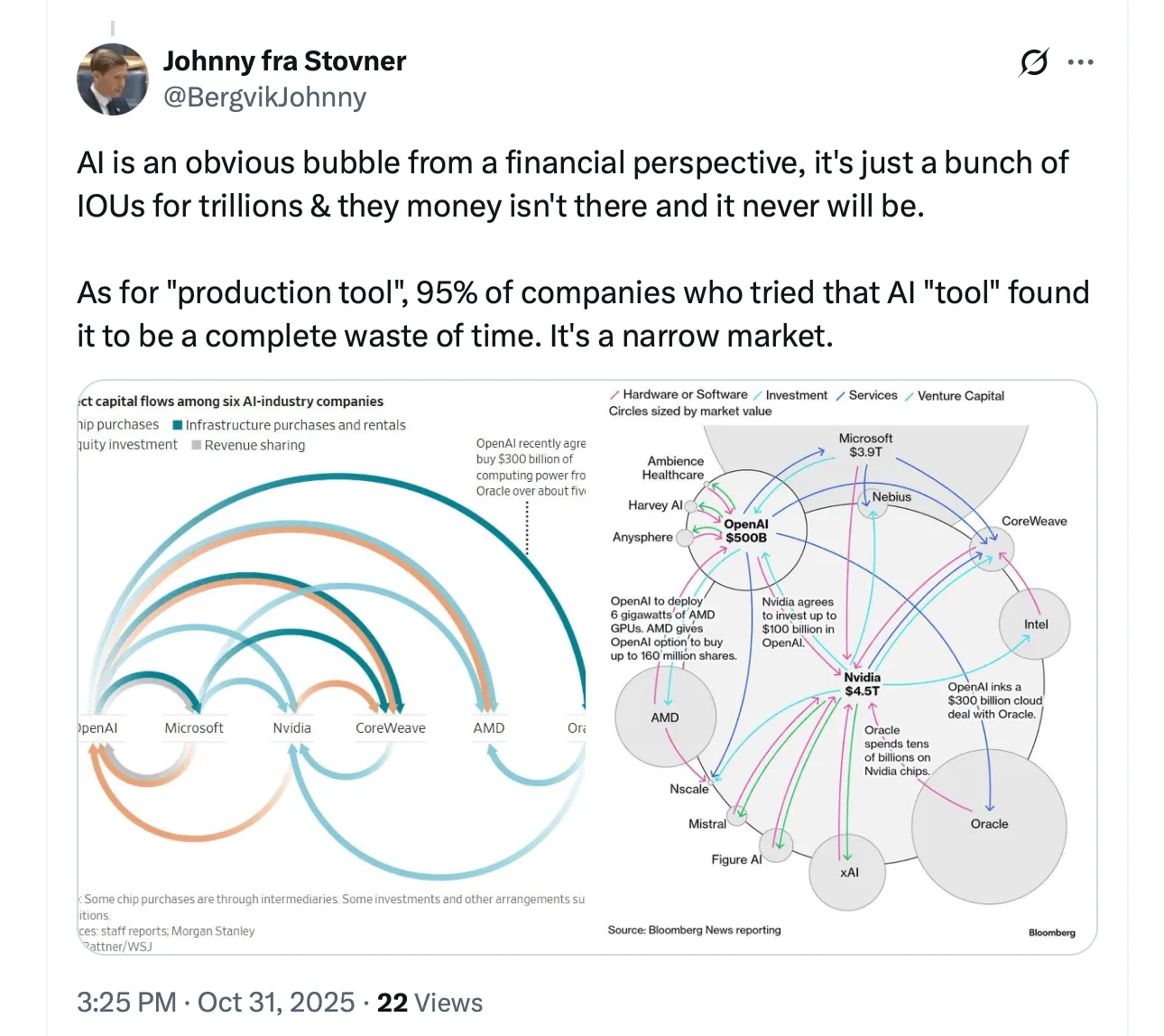
Economists and investors are now wondering whether the AI boom is heading for a dot-com-style correction. The rally that began with chatbots and data centers has spread to nearly every corner of tech, driving the S&P 500s gains in 2025. Yet according to the International Monetary Fund and Bank of England, nearly 70% of those gains are tied directly to AI euphoria—what one analyst called “ridiculous levels” of concentration risk.
The data back up the skeptics. Bank of Americas global fund manager survey shows 54% of respondents believe AI stocks are in bubble territory. Michael Burry, the “Big Short” investor known for spotting the 2008 crisis, recently issued his own style warning—shortly before the sell-off began. Danielle DiMartino Booth, a former Federal Reserve advisor, said AI valuations are now “40% higher than the dot-com era,” with market concentration exceeding 1929 levels.

The numbers are startling. Analysts estimate that the AI infrastructure buildout has created nearly $2 trillion in potential overcapacity, with data centers consuming massive amounts of water and energy. Capacity utilization at chip foundries like TSMC has dropped below 40%, while circular investments—like Nvidia funding OpenAI to buy AMD chips—create the illusion of unstoppable growth.
For investors chasing the next trillion-dollar opportunity, the problem isn‘t just hype—it’s economics. Training large models can cost up to $1 billion, yet consumer access often costs only $20 a month. The math doesnt add up. Still, not everyone is convinced the sky is falling.
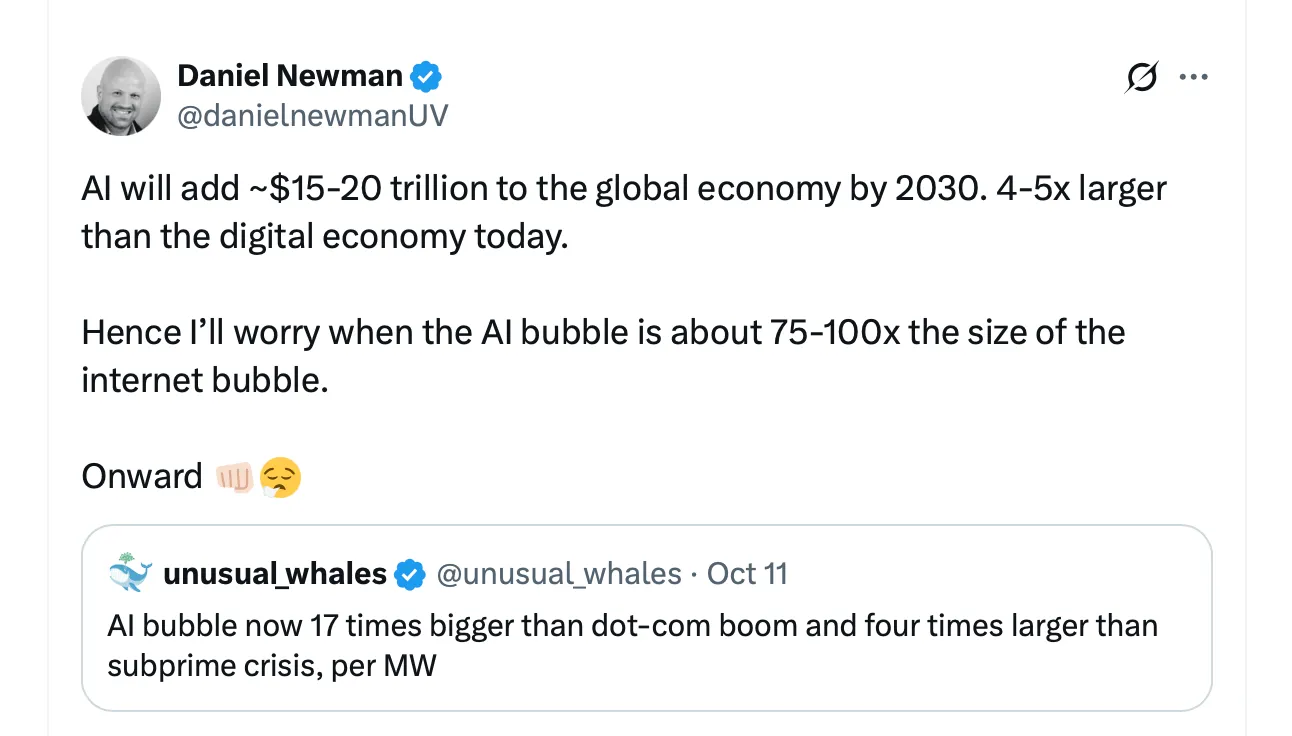
Not everyone believes AI is in a bubble.
Optimists like Daniel Newman see no bubble, predicting that AI could add up to $20 trillion to global GDP by 2030. The tension between long-term promise and short-term speculation is what makes this moment so precarious. Critics argue that markets are finally adjusting to reality. With 95% of corporate AI projects failing to produce returns, companies are freezing experimental budgets and scaling back infrastructure plans.
Investors are now re-evaluating exposure to overleveraged AI names that have dominated index gains for months. The correction may sting, but it could also be healthy. Goldman Sachs noted that this cooling period might separate real innovators from the vaporware vendors. If history repeats, some AI firms could vanish entirely—just as hundreds of dot-coms did after 2000—while the survivors redefine the next era of computing.
Whether the AI bubble bursts or merely deflates, one thing is certain: reality is catching up. The sector‘s dazzling potential remains, but hype alone can’t keep the lights—or the GPUs—on forever.