






A new report from Bitcoin infrastructure developer RootstockLabs argues that Bitcoins next wave of institutional demand could come from lending, yield generation and balance-sheet financing, expanding its role beyond a store of value.
RootstockLabs estimates that just 1.5% of Bitcoins (BTC) supply currently participates in lending and Bitcoin-native finance, while identifiable institutional investors hold roughly 3.9 million BTC. Putting more of those holdings to work could create additional demand for the asset without changing its fixed supply.
The analysis identifies two emerging sources of financial utility: generating returns from existing Bitcoin holdings through lending and structured credit, and using Bitcoin alongside fiat-denominated liabilities to improve corporate balance-sheet efficiency. RootstockLabs argues that both could encourage institutions to acquire and retain more BTC.
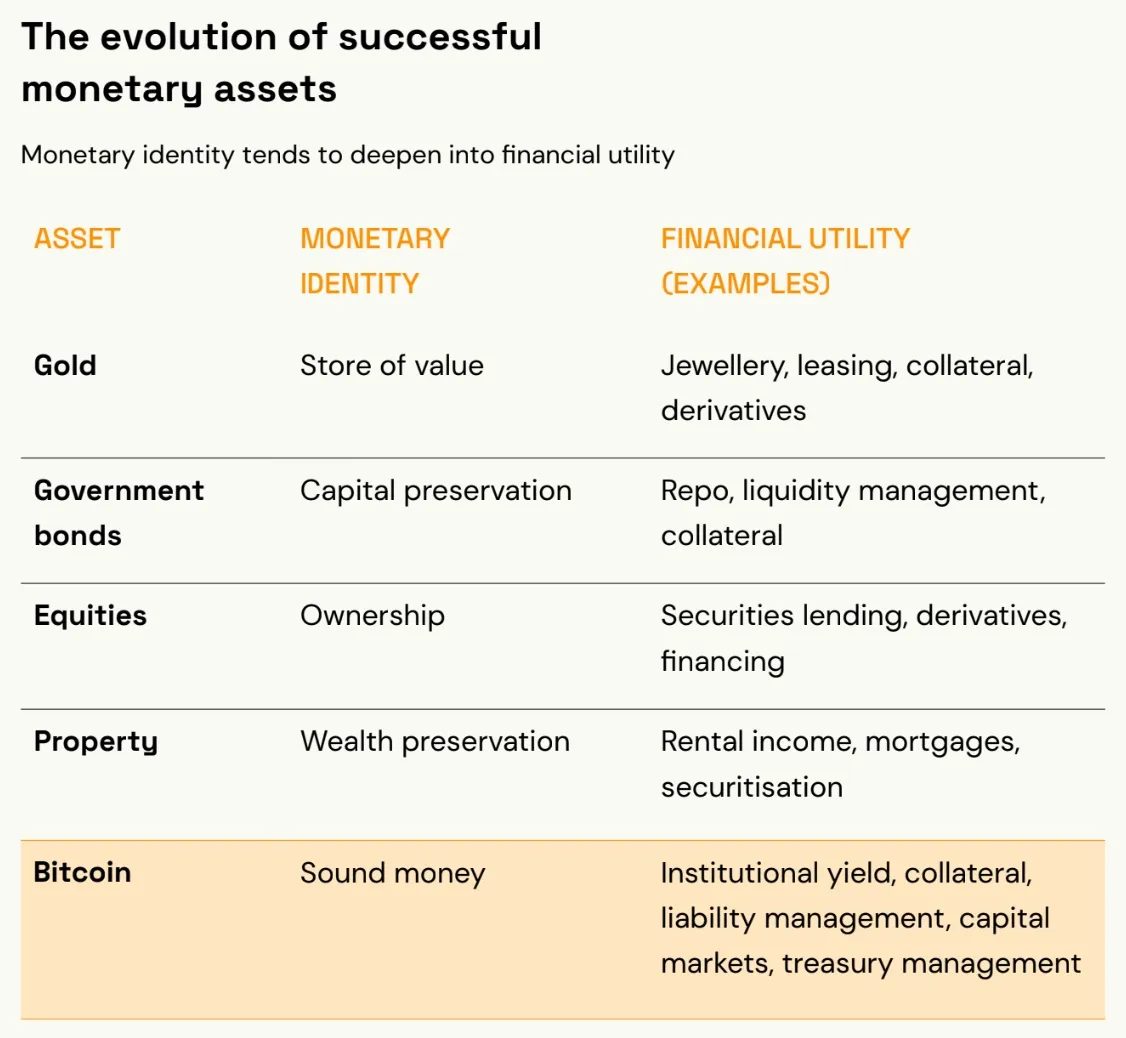
Bitcoins evolving financial utility compared with traditional assets. Source: RootstockLabs report
The report outlines a hypothetical scenario in which institutional Bitcoin holdings double to 7.8 million BTC. If 5% of those holdings earned a 5% annual yield, institutions would collectively generate 19,500 BTC a year. The figure represents potential returns on existing holdings, not a forecast of new Bitcoin demand.
Drawing a comparison to gold, the report argues that successful monetary assets develop additional sources of demand beyond their original role as stores of value. While gold found uses in jewelry and electronics, RootstockLabs sees Bitcoins next source of utility emerging through financial markets.
Related: Bitcoin ETF inflows climb to $176M as BTC rebounds above $80K
Could Bitcoins financialization introduce new risks?
Asked about the risks associated with Bitcoins growing financialization, Tony DiCarlo, director of institutional propositions at RootstockLabs and author of the report, acknowledged the concerns but argued that Bitcoins underlying design offers important advantages. He told Cointelegraph:
Yes, financialisation carries real risks. Fractional reserves, rehypothecation and excess leverage can grow around any scarce asset. Bitcoins traits reduce some of that risk as collateral is verifiable on-chain, liquidation rules are programmable and the supply of collateral cannot be diluted.
DiCarlo said borrower defaults, custody failures and legal enforceability remain concerns, while Bitcoins volatility adds to leverage risks.
However, he argued that the benefits of financialization could far outweigh those risks, pointing to MARAs $750 million in Bitcoin-backed loans to help finance a planned power plant acquisition in Ohio. The arrangement allows MARA to retain its Bitcoin holdings while using them as collateral to finance real-world infrastructure.
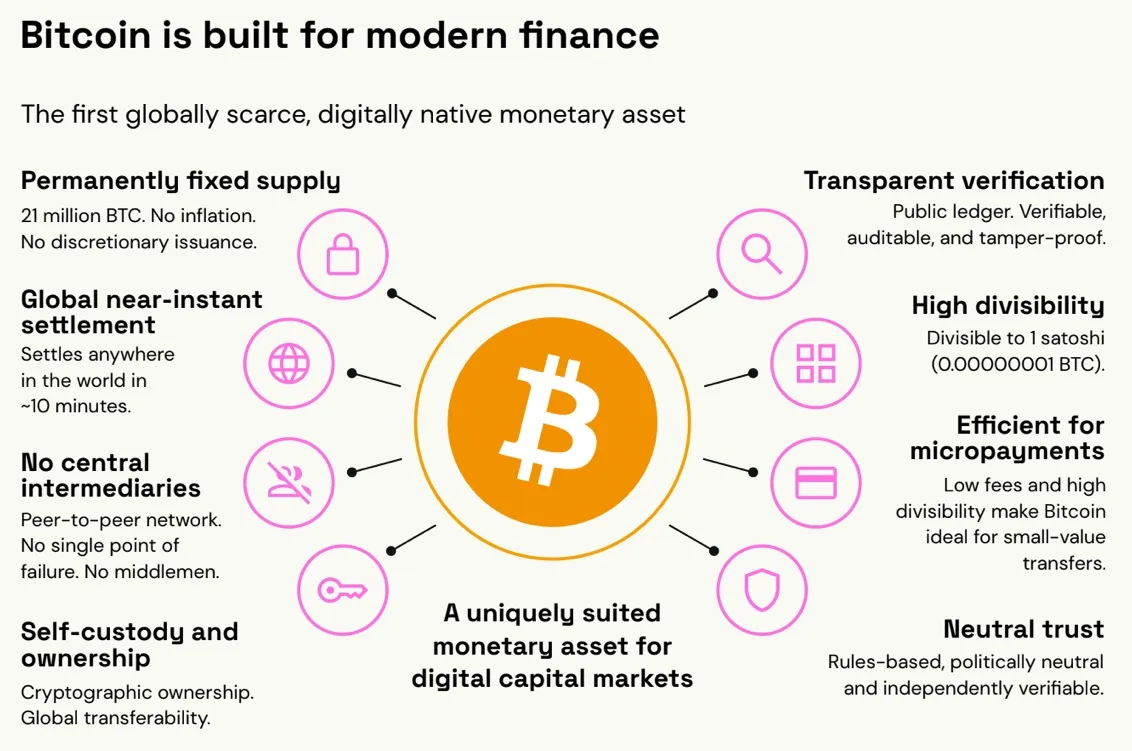
Bitcoins key features for modern finance. Source: RootstockLabs report
DiCarlo also acknowledged that institutional adoption could concentrate Bitcoin holdings among a small number of custodians. While spot Bitcoin exchange-traded funds have been a major driver of institutional adoption, “shareholders own shares, not coins,” he said, warning that a few large custodians could end up holding most of the Bitcoin.
Nevertheless, DiCarlo maintained that Bitcoins decentralized architecture remains a fundamental advantage, allowing holders to retain control of their assets and enabling financial services with fewer intermediaries, potentially reducing counterparty risks and fees.
Bitcoin‘s defining trait is that nobody owns it and you don’t need an intermediary to use it. Holders keep control of their keys and because there are fewer middlemen, financial services built on Bitcoin can carry less counterparty risk and fewer fees. Those advantages draw users in and they reward the builders who design around them.
Magazine: Crypto could outperform AI stocks: Wall Street veteran Jordi Visser