






On this day, 17 years ago, Satoshi Nakamoto opened an account on BitcoinTalk, the place that would become the home of early Bitcoin enthusiasts and then turn into a public forum for crypto in general, until social media platforms took over the internet.
The network itself was barely 1 year old, and its future raised more questions than answers. Satoshi Nakamoto welcomed users on the forum and invited any questions people had regarding the cryptocurrency.
The quick timeline
In 2010, the revolution began: 10,000 BTC was used to buy two pizzas, one of the first uses of the digital asset in exchange for a commodity. In May, Laszlo Hanyecz probably had the most expensive pizza dinner in history, considering how much BTC rallied after that. By December, Satoshi made their final BitcoinTalk post and announced their farewell.

Source: BitcoinTalk
The 2011-2014 period turned out to be the foundation for the network as a whole. Bitcoin became an open-source project maintained by others. The first halving happened in November 2012 and reduced the block issuance from 50 to 25 BTC per block.
The first-ever exchange implosion, Mt.Gox in 2014, raised serious questions about the security and stability of centralized exchanges, an issue we haven't solved 17 years later.
2017-2021 were the years when the industry truly blossomed. We had our first bull run on Bitcoin, which pushed the price above expected levels, to almost $20,000 in December 2017, along with the first altcoin bull run and the birth of new technologies like smart contracts, NFTs and many more. The next cycle took Bitcoin to around $69,000 in November 2021.
However, with the growth of the industry, multiple conflicts arose around safety, integrity and usage. The first country in the world to adopt Bitcoin was El Salvador, which implemented the digital currency as a true means of payment, in addition to accumulating it in its treasury.
2022–2024: Crisis Meets Wall Street
2022 was the pivotal year, marked by the FTX and Terra crashes that changed how investors treat markets in general. FTX wasn't just an exchange: it was the backbone of the cryptocurrency market in those years. It aimed to rival Binance and become the bridge between institutional investors and crypto.
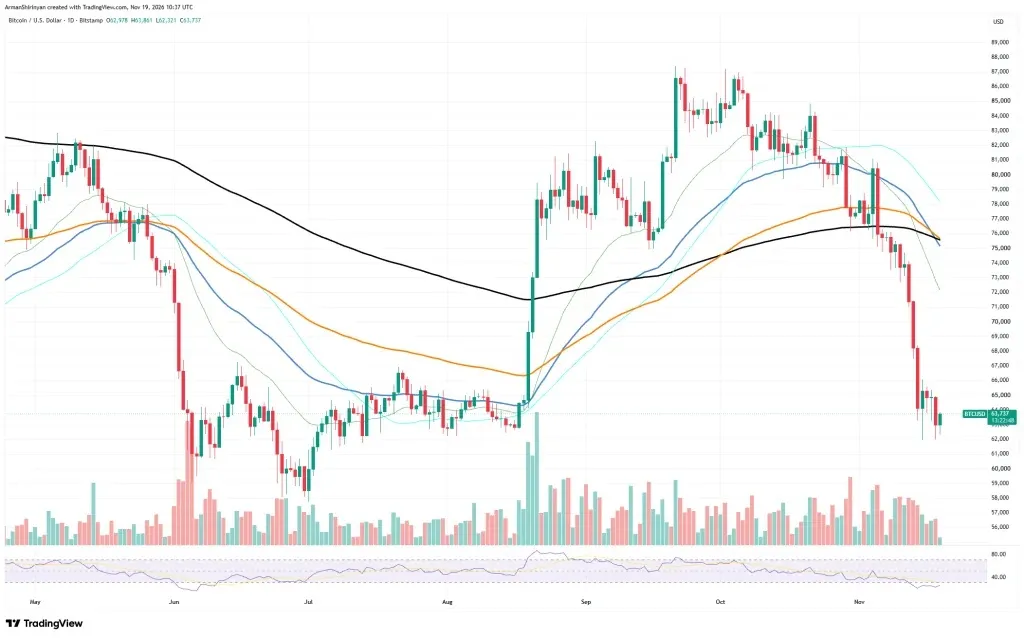
BTC/USDT Chart by TradingView
However, poor risk management, issues with fund allocation and many other factors caused an implosion that ended the bull run.
In 2024, Wall Street arrived in crypto with ETFs, ETPs, perpetual futures and a regulatory framework. The digital assets industry became a part of a larger market. Whether that is good or bad is a question to consider, but one thing is clear: Bitcoin has come a very long way since 2010 and is evolving to this day.
2025–2026: From Outsider to Policy Debate
The next step is the arrival of AI and rising cybersecurity risks, which go toe-to-toe with the quantum danger. How the first cryptocurrency handles them is a question that directly affects its future.