






Since the announcement of the modular open-source frameworks Op Stack by Optimism and Arbitrum Stylus by Arbitrum, the development barriers for Layer2 and Layer3 have significantly lowered, leading to a surge in application projects building their own Layer2 solutions for high-frequency needs.
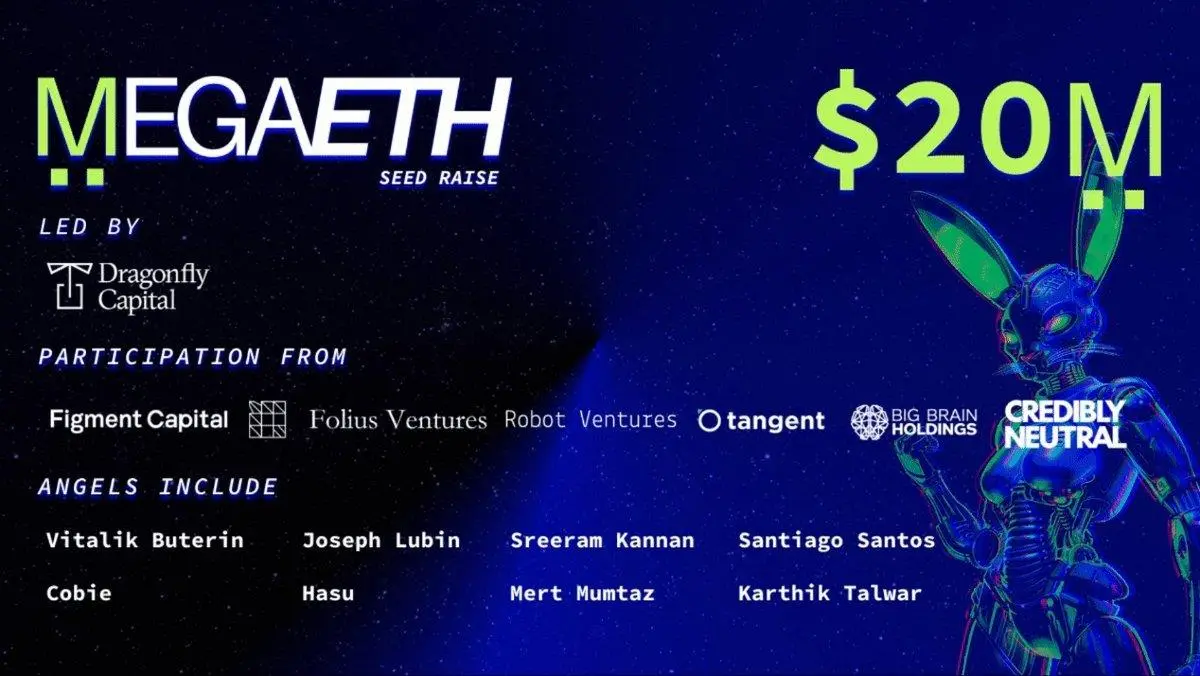
Despite the proliferation of Layer2 solutions, it is rare to see a Layer2 project secure $20 million in seed funding from top-tier capital. MegaETH has done so, with a $20 million seed round led by Dragonfly and participation from Figment Capital, Robot Ventures, and Big Brain Holdings. Angel investors include Vitalik, Cobie, Joseph Lubin, Sreeram Kannan, and Kartik Talwar.
Real-Time Blockchain
Creating more chains doesn't inherently solve blockchain scalability issues. Current L1/L2 solutions face common challenges:
- Low transaction throughput on all EVM chains
- Limited ability for complex applications to run on-chain due to scarce computational resources
- Infeasibility of applications requiring high update rates or fast feedback loops due to long block times
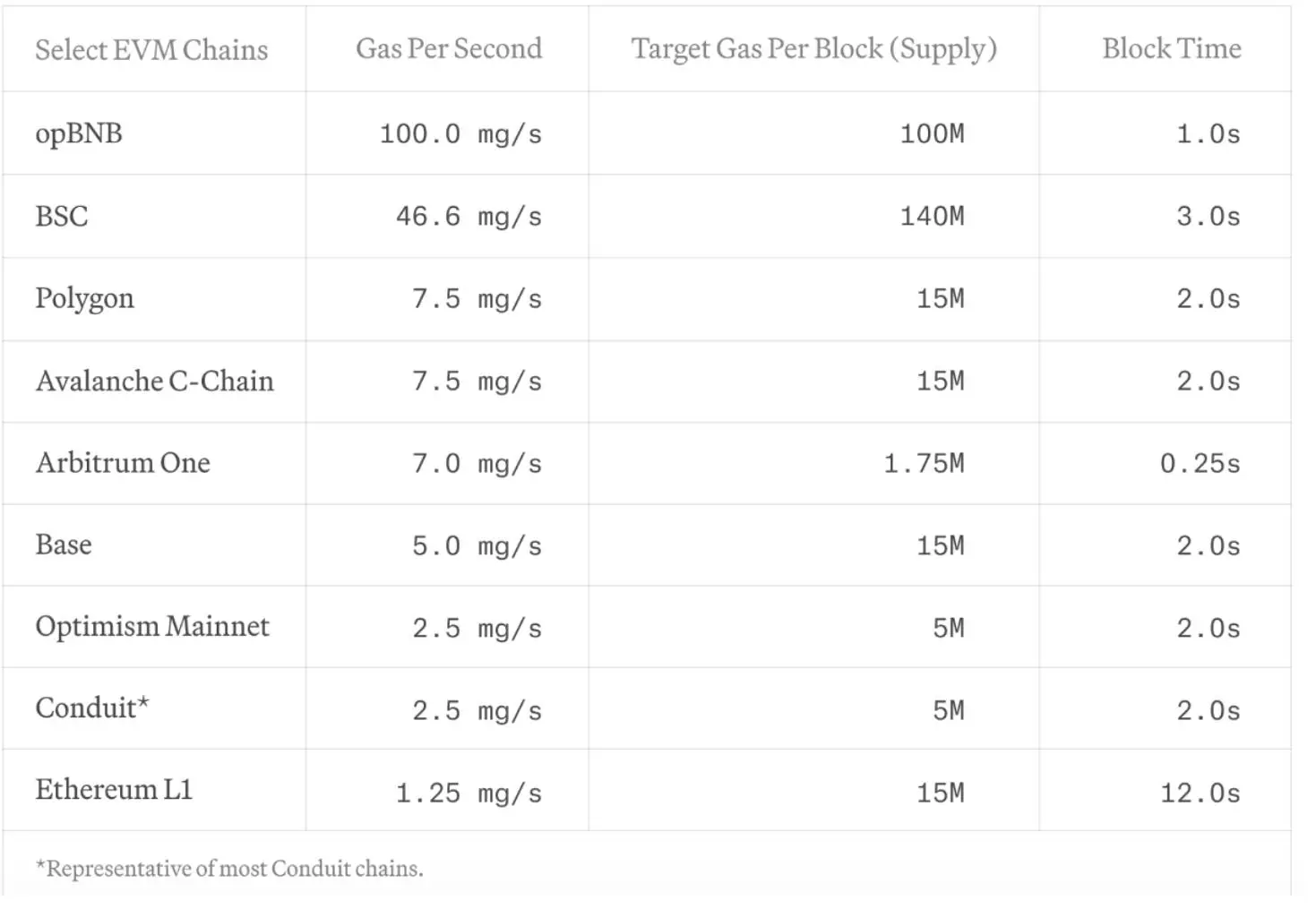
MegaETH aims to address these issues by specializing nodes to achieve real-time settlement and processing. MegaETH claims to be the first “Real-Time Blockchain,” capable of handling over 100,000 transactions per second with sub-millisecond latency.
Implementation Method
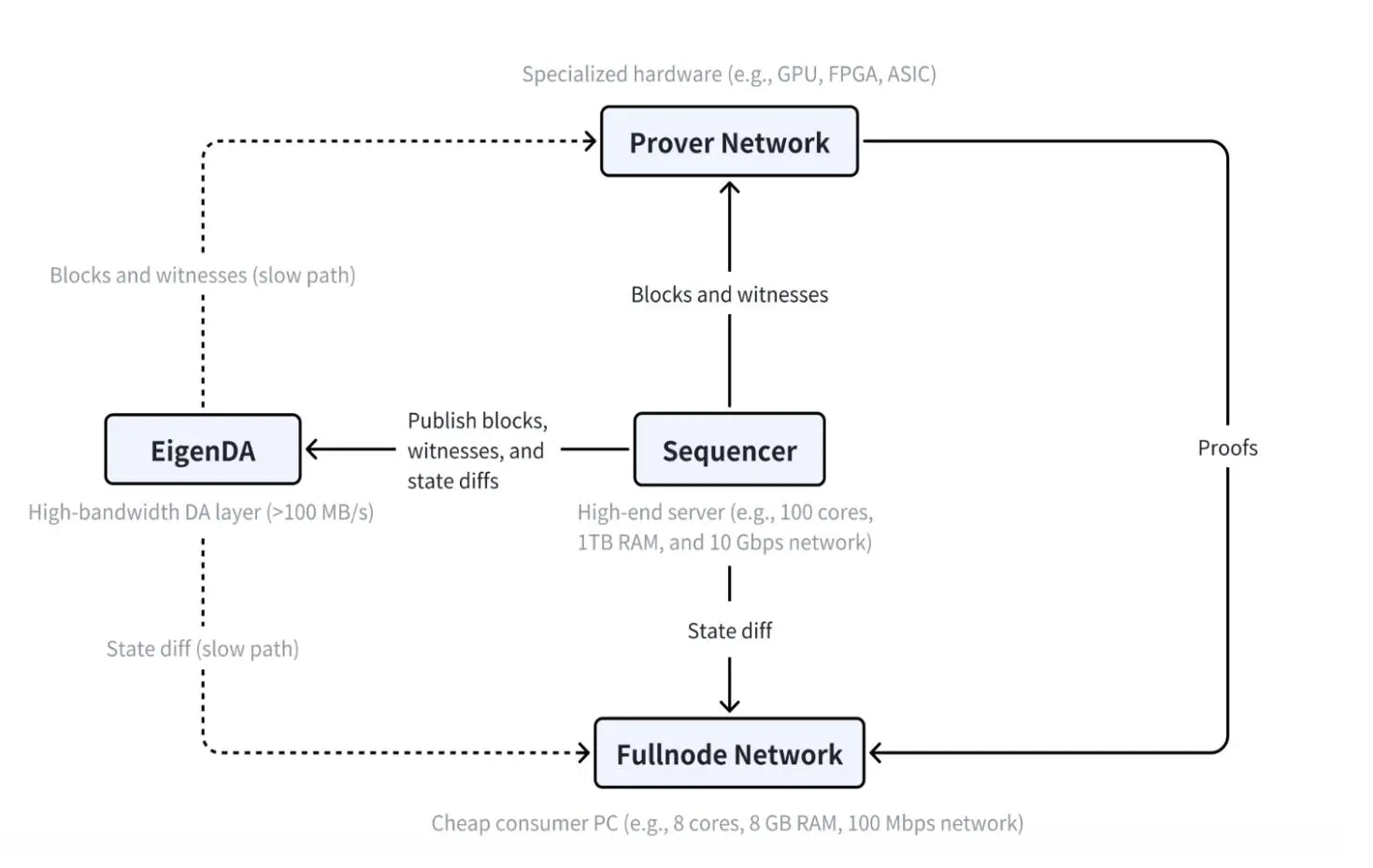
MegaETH achieves real-time settlement and processing through node specialization, which reduces consensus overhead by separating transaction execution tasks from full node responsibilities. The three main roles in MegaETH are sequencers, provers, and full nodes:
- A single active sequencer executes transactions at any given time, with other nodes updating their local state via P2P networks without re-executing transactions.
- Sequencers handle transaction ordering and execution, eliminating consensus overhead during normal operation by having only one active sequencer.
- Provers use stateless validation schemes to asynchronously and unorderedly verify blocks.
MegaETH's approach involves performance testing to meet targets, optimizing high-performance sequencers in state access, interpreters, state synchronization, and state root updates to achieve its real-time blockchain goal.