





Recently, Ethereum has encountered significant FUD due to its weak price performance. Despite the introduction of the EIP-1559 burn mechanism, the decline in on-chain activity and usage has slowed the burn rate, failing to offset the increased supply of ETH, leading to continued inflation.
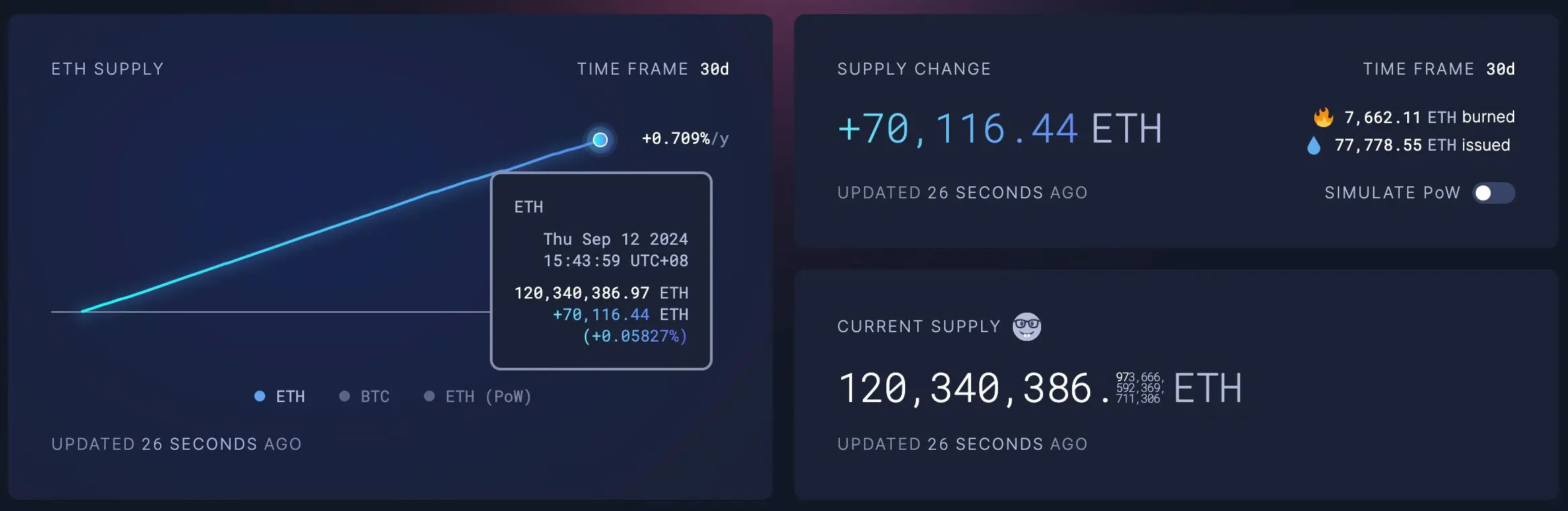
On-chain activity has also declined, with daily active addresses and transaction volumes decreasing. Previously, DeFi and NFTs brought a surge of users and transactions to Ethereum, but as these applications lose steam, they can no longer sustain high on-chain activity, causing network revenue from transaction fees to drop. This has raised concerns about Ethereums future, further fueling FUD.
Although Layer 2 development and the introduction of blob structures have successfully lowered gas fees, on-chain demand is fundamentally driven by profit opportunities. When there are no clear alpha opportunities, it‘s difficult to attract users to engage in on-chain activities. While Layer 2 has alleviated the load on the main chain, it has also fragmented liquidity, as various Layer 2 solutions isolate funds, further impacting Ethereum’s overall on-chain activity and economic performance. This fragmentation has diluted Ethereums pricing power, weakening its competitive edge in the broader blockchain ecosystem.
The Empty Cities Created by Layer 2
Since the beginning of 2024, the narrative of on-chain performance and technical superiority has lost its power. Layer 2 was once seen as the key to Ethereums scalability, with technical advantages at the forefront of market discussions. However, as the market cooled, this narrative failed to sustain user engagement. After the airdrop expectations were shattered, many Layer 2 networks became “empty cities,” with zkSync being a prime example. Users flocked in hopes of lucrative airdrops from early participation, but once these expectations were met, user activity plummeted, leading to a sharp drop in on-chain activity.
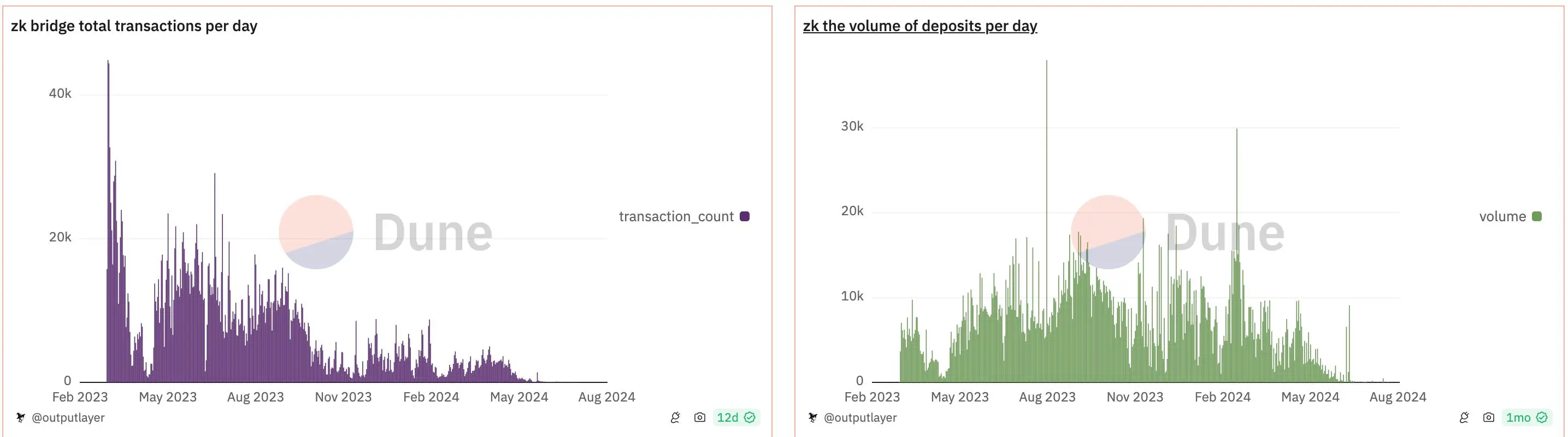
The core issue behind these “empty cities” is the lack of sustained, large-scale applications, despite the improvements in performance. High throughput and low transaction costs alone arent enough to maintain long-term user activity. Without groundbreaking applications to keep users engaged, these networks struggle to retain their user base.
Furthermore, Layer 2 and data availability (DA) solutions have diverted significant economic activity from Ethereum‘s main chain. While these solutions have reduced the load on the mainnet, they have also fragmented liquidity and diluted Ethereum’s value aggregation. Economic activity that once belonged to Ethereum has dispersed across various Layer 2 networks, gradually weakening Ethereums pricing power and diminishing its network effects and market advantages.
VC Investment Preferences
VCs have always favored infrastructure projects because they offer higher certainty, larger profit margins, and the capacity to accommodate more capital. Compared to application-layer projects, infrastructure projects can absorb more investment and offer more predictable returns. Over time, VCs have developed a path dependency in their investment strategies.

For example, early VC investments in Ethereum, Cosmos, and Polkadot have yielded substantial returns as these projects have become central to the blockchain industry. These investments have thrived across multiple bull and bear markets, ensuring long-term profitability.
Moreover, with the rise of modular blockchain solutions, more projects are creating their own Layer 2 solutions to boost valuations and raise growth ceilings. This trend has become the “crypto political correctness,” where building infrastructure has become the default strategy for Ethereum ecosystem projects.
Conclusion
Ethereum‘s dilemma is clear: while its infrastructure has improved, offering better performance and scalability, the lack of a breakthrough, large-scale application remains a key challenge. VC funding has fueled the rise of Layer 2 and infrastructure projects, but despite their technical advancements, they have failed to deliver user-driven applications, leading to a decline in on-chain activity and value fragmentation. Ethereum’s progress in infrastructure is undeniable, but the challenge lies in transforming this strong foundation into real user demand and a thriving application ecosystem, which remains the biggest hurdle for its future.
What are some of the challenges currently faced by the Ethereum ecosystem, according to the article?
(Choose all that apply)
A) Ethereums pricing power is diluted due to Layer 2 solutions.
B) Ethereum has seen a surge in large-scale applications in 2024.
C) Layer 2 networks like Starknet and zkSync have become “empty cities” after airdrop expectations were met.
D) VC investments favor infrastructure projects due to higher certainty and profitability.