This Thursday, Ethereum Layer2 solution Blast, utilizing the Optimistic Rollup mechanism, officially launched its mainnet. With the mainnet going live, users can now withdraw funds previously deposited.
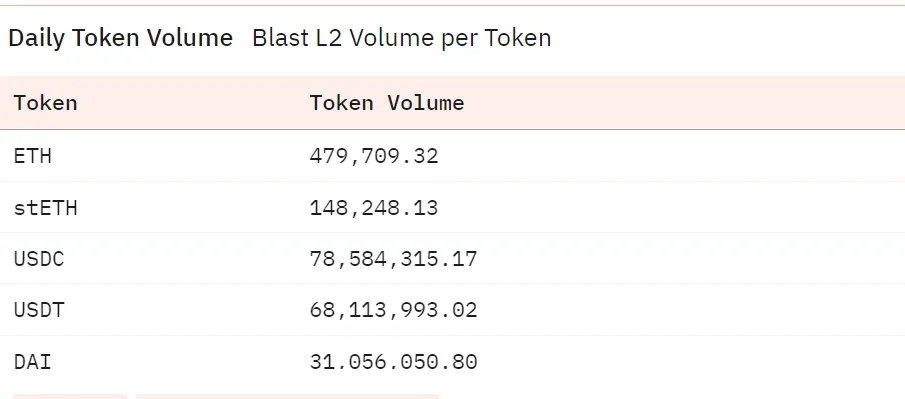
According to data from Dune Analytics, it's evident that over 180,000 users have locked tokens worth over $2.3 billion on Blast. This primarily includes approximately 479,000 ETH, 148,000 stETH, 78 million USDC, and 68 million USDT.
It is reported that Blast, founded by Blur's founder Pacman, was launched in November, and on November 21, it announced the completion of a $20 million financing round. The financing was led by Paradigm, Standard Crypto, eGirl Capital, and Mechanism Capital, with participation from angel investors such as Andrew Kang, a co-founder of Lido, Hasu, a strategic advisor for The Block, and CEO Larry Cermak.
Existing Layer 2 solutions offer a baseline interest rate of 0%. Blast stands out as the only Ethereum Layer 2 solution that provides Ethereum earnings with both ETH and stablecoin value stability. Specifically, Blast involves participating in ETH staking, with staking rewards being distributed to users and dapps on the Layer 2 network. On Blast, users' balances automatically compound, and they receive additional rewards in Blast tokens.
Even before its mainnet launch, Blast had already amassed over $2 billion in funds, indicating a high level of market enthusiasm. It is anticipated that the token's launch could reach “unicorn” status in the future.
While Blast has garnered significant attention and investment, there are also voices of skepticism within the community. This is primarily due to the following two reasons:
Blast Plagiarizes Optimism Code
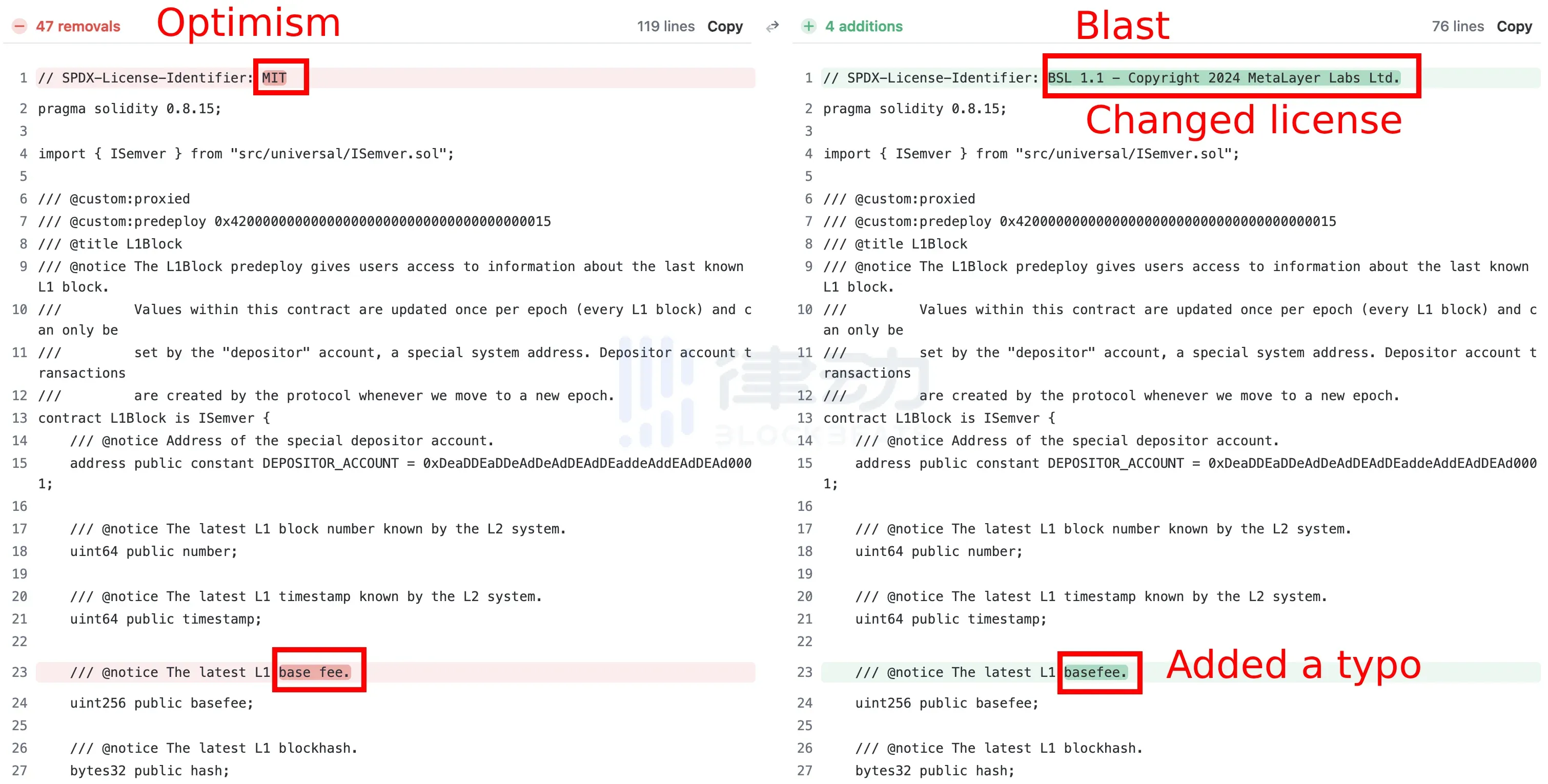
On February 1st, @0xKaden posted a tweet on social media platforms, stating that Blast changed Optimism's MIT license to BSL.
Following this announcement, gaslite co-founder @PopPunkOnChain promptly compared the code repositories of Blast and Optimism. It was observed that in the original Optimism code repository, the first line reads “// SPDX-License-Identifier:MIT”, whereas in Blast's commit interface, “MIT” has been changed to “BSL”.
Not only was there a modification in the license, but also, in line 23, the code space for “base fee” was removed and changed to “basefee”. @PopPunkOnChain indicated that Blast's intention seems to be forking Optimism's code, adding spelling errors, deleting functionalities, and even jokingly stating that for Blast, this “doesn't require spending a lot of money”.
Blast Multi-Signature Security Concerns
Previously, Polygon Labs developer relations engineer Jarrod Watts stated that Blast's contract is an upgradable contract controlled by a 3/5 multi-signature mechanism, with all 5 addresses being anonymous new addresses. Blast could potentially execute code upgrades via multi-signature and immediately siphon funds. In response to this, Blast stated that security involves multiple dimensions including smart contracts, browsers, and physical security. Immutable smart contracts are typically considered more secure but may pose greater risks. Blast also mentioned plans to switch hardware wallet types for one of the multi-signature addresses within a week to enhance security.