






Crypto traders can put AI agents to work around the clock, but Animoca Brands chairman Yat Siu warns that users risk building their trading routine around a service they dont control.
An agent can keep searching for new information and alert its user to developments they might otherwise miss, Siu tells Cointelegraph on the sidelines of Token2049 Singapore.
He uses conference planning as an example. A chatbot could supply a list of events when asked, but an autonomous agent would be on the lookout for new announcements and suggest attendance when a worthy event popped up.
But the technology still has teething problems. Sius own agent became so focused on crypto trading and investment management that it tried to interpret unrelated questions as being about crypto. The solution is to run multiple, specialized agents instead.
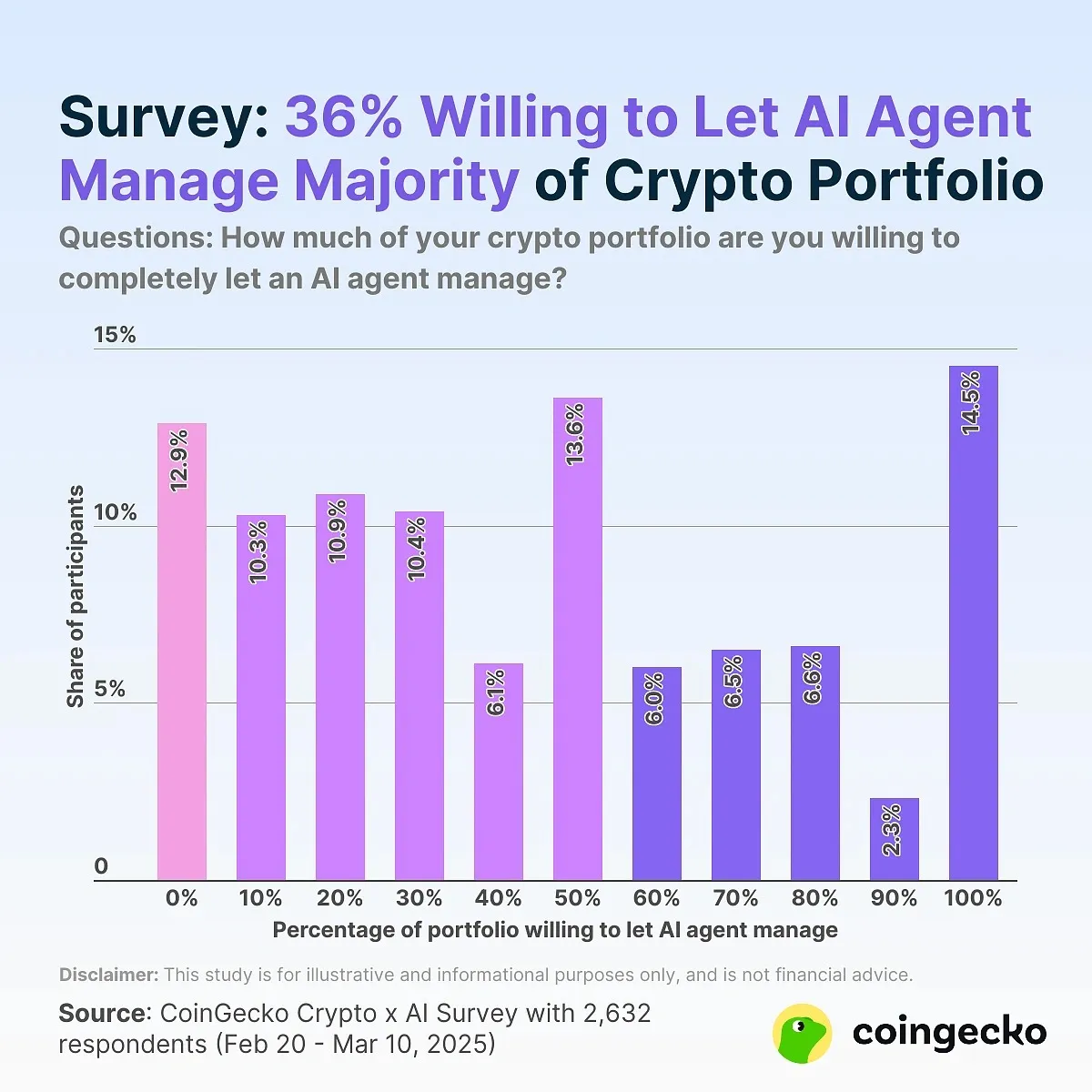
In a 2025 survey, 14.5% of respondents said they would let AI agents manage their entire crypto portfolio. Source: CoinGecko
“If you have one agent that handles your personal schedule, that handles your family schedule, that handles your trips … and on top of it gives you advice on your crypto, that‘s not just going to be confusing for the agent. It’s going to be confusing for you,” Siu says.
The questions that set trading strategies apart
It‘s also worth noting that running an agent won’t necessarily give you edge. A thousand people asking AI about the same trade could receive roughly the same answer, Siu says.
Regulators have taken note of the possibility that AI-driven traders can pile into the same positions. The Bank of Englands Financial Policy Committee warned in April 2025 that widespread use of similar models could lead investors to take related positions during periods of stress and amplify market shocks.
Related: Tech chief says EU can fend off rogue AI risk: Report
Responses diverge when users ask follow-up questions rooted in their own knowledge and concerns.
“Suddenly you query and you ask, and then your taste or your ideas or your thinking starts forming into it,” he says.
Over time, an agent can learn what its user prefers and begin trading along those lines. Those inputs help shape personalized crypto trading strategies.
AI agents receive wallets and trading tools
Crypto firms are already giving AI agents the tools to handle money alongside information.
Coinbase introduced Agentic Wallets in February, allowing agents to spend and trade crypto within limits set by users. Binance launched AI Agent Skills in March to give agents access to live market data and the ability to place and manage spot orders.
Related: AI potential to drive crypto demand remains ‘underappreciated’: BlackRock
Such tools allow users to delegate to agents more of the work required to follow markets 24/7 and potentially capture opportunities during the wee hours, without compromising sleep.
Siu sees human input continuing through the ideas and questions that guide an agent. AI can learn a users preferences over time, he says.
“By human input, I don‘t mean human in the loop that approves it,” he says. “But the human is the one that ultimately is going to say, ’Wait, you should look at this.”
The privacy cost of an AI that knows you
Siu suggests treating an AI assistant like a third-party adviser. He says that before handing over a document, consider what information the agent needs to answer the question and what can be left out.
“What about your personal finances, what income you make, who your closest friends are?” Siu asks. “These are small little details that they dont know about you, and now they have permission to know that about you.”
A trader might spend months teaching an agent which markets to follow and what information to digest before making a decision. An agent can remember the conversations to save the user from having to explain the same preferences over and over again.
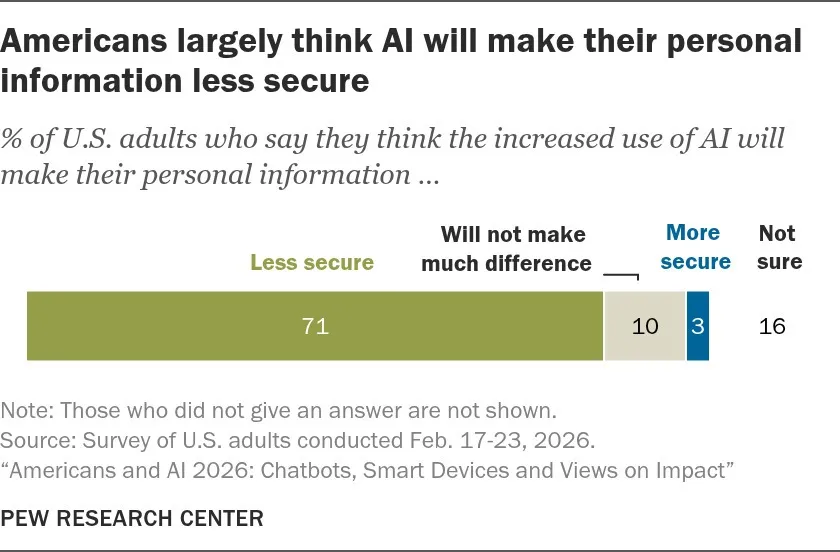
Some 71% of US adults believe increased AI use will make their personal information less secure, according to a 2026 survey. Source: Pew Research Center
The danger is that the company running that service would still control access and an account suspension could interrupt everything youre doing all at once.
Siu asks users to imagine an assistant that has learned about them over years, only to disappear one morning.
“At minimum, you have the right to download your data so that you can basically transfer it somewhere else so that another agent might be able to take over,” Siu says.