






The US dollar suffered its sharpest post-election setback in weeks after Democrats swept Congress in the US Midterms. Falling Treasury yields and uncertainty over Washingtons economic policies pushed investors away from the currency.
The US Dollar Index (DXY), which measures the dollar against six major currencies, touched 101.10 on November 4, a five-week low. That was roughly 1.7% below Octobers 18-month peak of 102.87.
However, the dollar remains about 4% higher in 2026. It also rebounded to 102.28 on November 6, suggesting the recent selloff is far from settled.
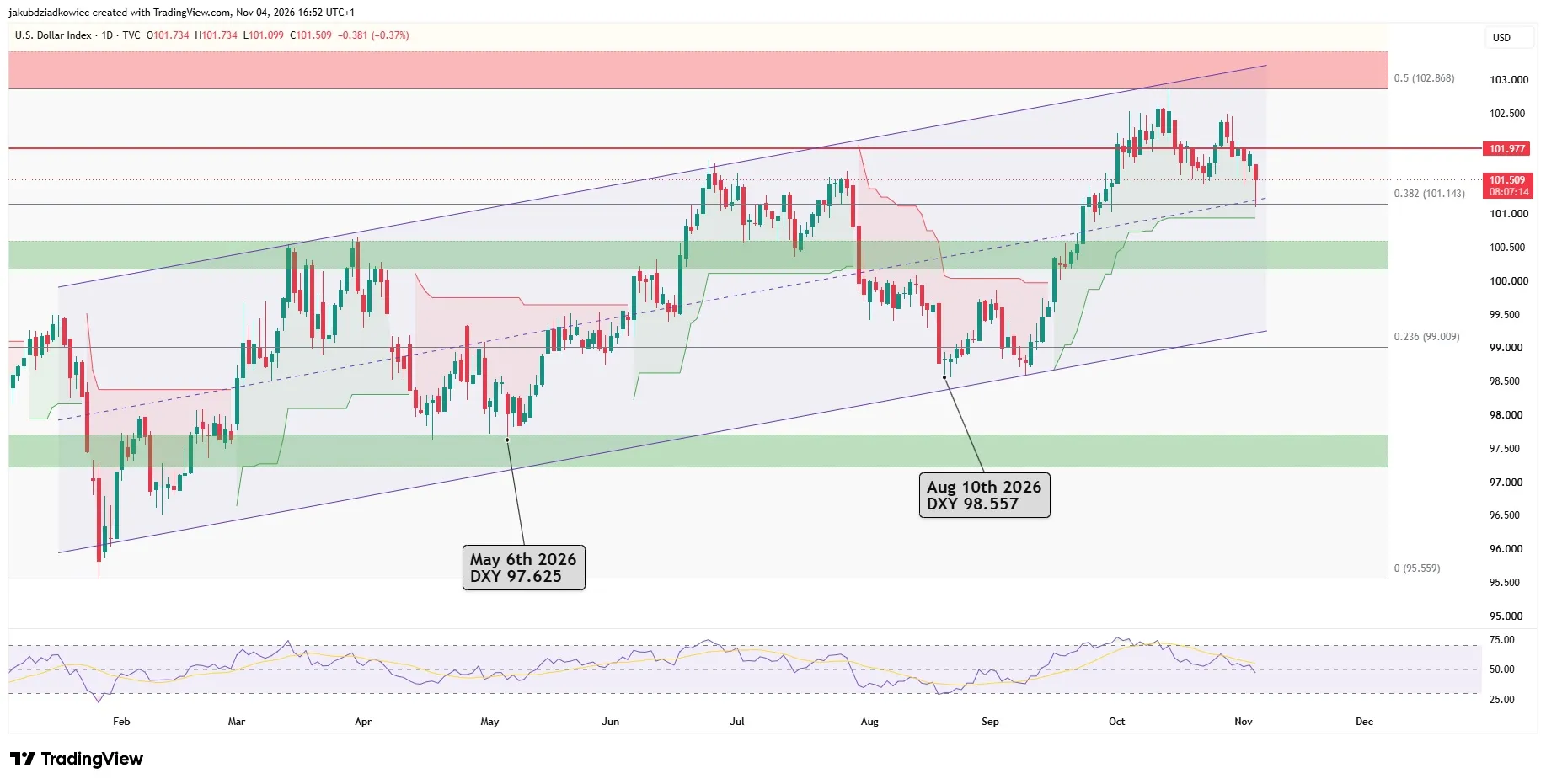
DXY daily chart. Source: TradingViewWhy Is the US Dollar Falling?
Three developments explain the sudden pressure.
- Political gridlock:Democrats winning both chambers of Congress could restrict President Trumps spending plans. Smaller fiscal stimulus expectations may reduce government borrowing and ease pressure on Treasury yields.
- Falling bond yields:The 10-year Treasury yield dropped from around 5.3% in early October to 4.92% on November 4. Lower yields reduce the appeal of dollar-denominated investments and weaken demand for the currency.
- Concerns over US growth:Investors fear a Democratic Congress could tighten oversight of artificial intelligence, threatening an industry driving significant US investment. The prospect has already rattled technology stocks.
“Democratic control of Congress will make it harder for the White House administration to pass major partisan legislation,” said Invesco strategist David Chao, according to Channels.
Yet the latest economic data complicates the bearish outlook.
The US added 165,000 jobs in October, substantially beating expectations. That strengthened bets on another Federal Reserve rate hike in December, helping the dollar recover on Friday.
What Does a Weaker Dollar Mean for Stocks and Crypto?
For investors, the implications are mixed.
- US stocks:A weaker dollar can boost overseas earnings for multinational companies and ease financial conditions. However, renewed inflation or higher interest rates could hurt growth stocks.
- Bitcoin and crypto:Dollar weakness and declining yields generally favor risk assets, including Bitcoin. Yet crypto can still fall when investors become concerned about the broader economy. Bitcoin lost more than 5% during the recent AI-driven market selloff.
The dollar‘s next direction will depend heavily on inflation and the Fed’s response. For stock and crypto traders, Treasury yields and the 101 DXY support zone remain important signals to monitor.
The US growth and inflation data drops today alongside the Feds preferred inflation gauge.
Analysts expect the US economy to have grown 2.1% in Q2, while the Atlanta Feds GDPNow model points to just 1.6%.
What Happens Next for the Dollar?
Technical charts identify two possible paths:
- Bullish:Holding above 100.90–101.15 could support another move toward 102.87–103.
- Bearish:A sustained break below 100.90 could expose 100.20–100.60, followed by the 99 area.
The weekly chart shows a rising wedge, suggesting the broader uptrend remains vulnerable. The daily chart also highlights the importance of the 101 support area.
The next inflation report and Federal Reserve signals could decide which scenario develops.