






Bitcoin plunged toward $74,000 late Sunday as another wave of forced selling swept through crypto markets. The latest crash comes as investors face several warning signs that the downturn could deepen.
Bitcoin touched $73,708, its lowest since August, while Ethereum fell to $2,100. CoinGlass data showed $855.69 million in liquidations over 24 hours. More than 140,000 traders were liquidated, with long positions accounting for 90.2% of losses.
The scale is concerning. Four warning signs suggest Bitcoins troubles extend beyond excessive leverage.
Sponsored

Sponsored
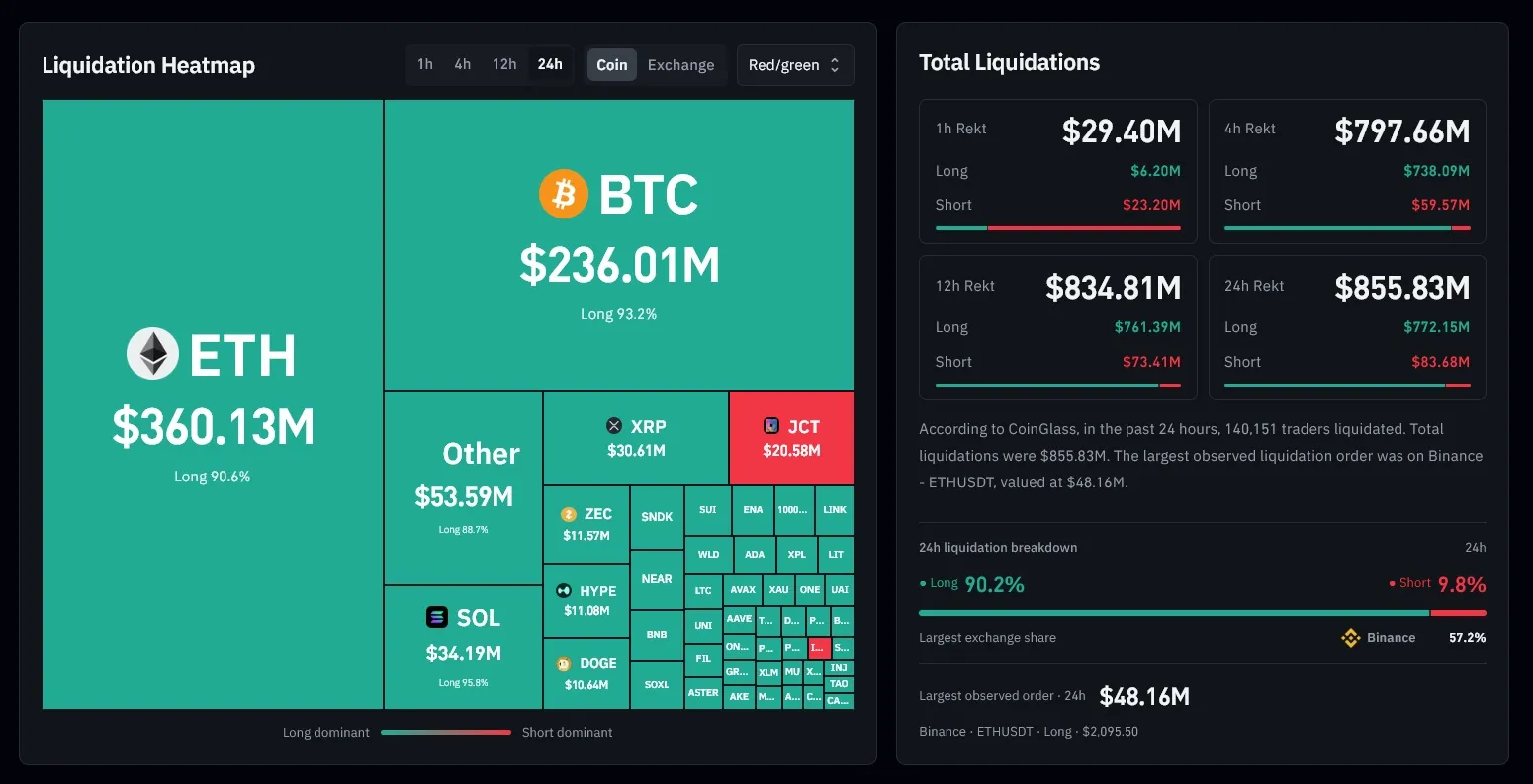
Crypto Market Liquidations on November 8, 2026. Source: Coinglass1. Bitcoin Has Broken Its Critical Support
Bitcoin has fallen below its short-term holder cost basis, estimated near $75,700 by Glassnode.
This means many recent buyers are underwater. Further declines could encourage them to sell, making a recovery harder.
Sponsored
Sponsored
2. Institutional Investors Are Pulling Money Out
US spot Bitcoin ETFs recorded approximately $1.28 billion in net outflows last week. Friday alone saw $411.9 million withdrawn, including $403 million from BlackRocks IBIT.
These withdrawals show that selling pressure extends beyond leveraged derivatives.
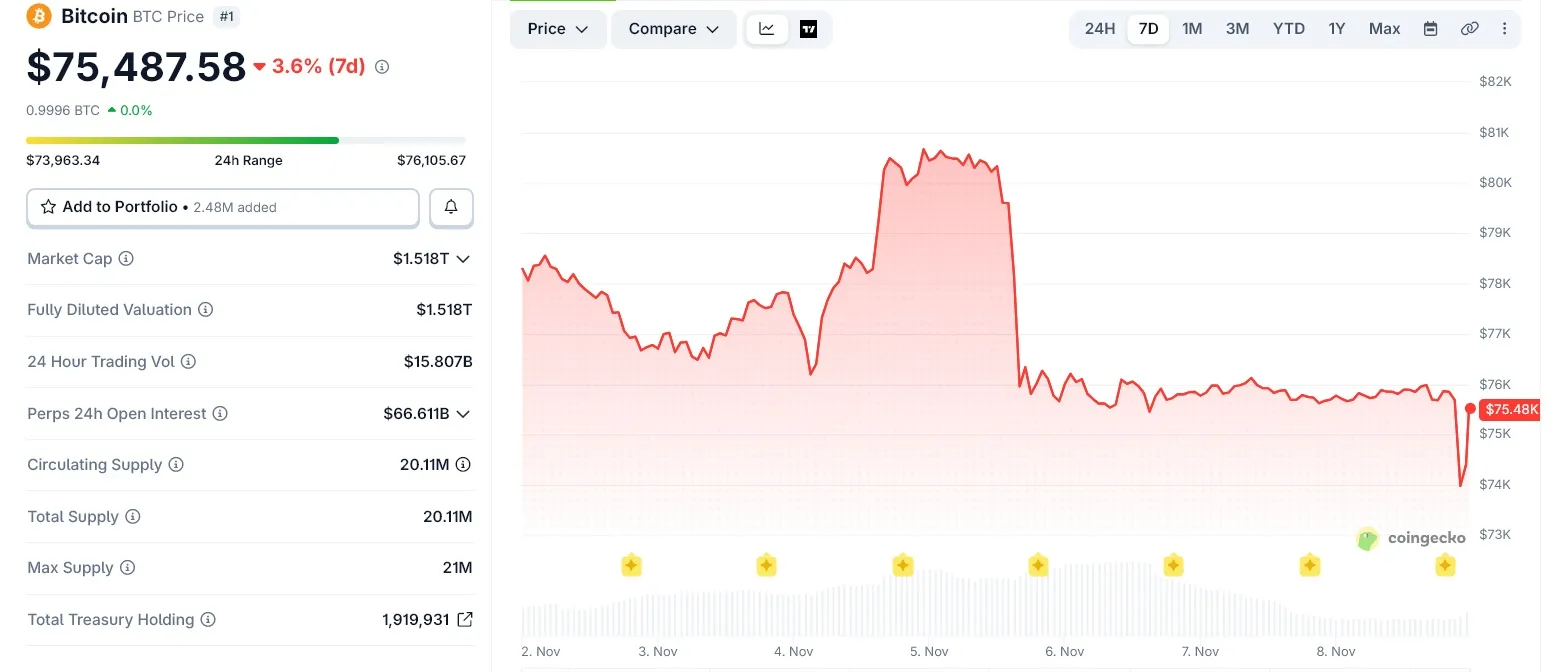
Bitcoins 7-Day Price Chart Shows Massive Volatility. Source: CoinGecko3. Buyers Are Struggling to Defend Bitcoin
Analysts warn that spot buyers have shown little aggression.
Recent recoveries have depended heavily on leveraged futures positions. Sundays liquidations exposed how quickly that support can disappear.
4. Wall Street and Political Risks Are Adding Pressure
The Nasdaq plunged 5.5% on Thursday amid concerns about AI valuations and regulation.
Meanwhile, Democrats US midterm victories have raised uncertainty over future crypto legislation. The recent $6 billion Binance hack has further damaged confidence.
How Much Worse Could Bitcoin Get?
The immediate outlook remains dangerous.
Bitcoin needs to reclaim $75,700 and eventually the 77,000–80,000 range to restore confidence. Otherwise, $70,000 becomes an increasingly important downside level.
Mondays US stock market reopening and subsequent ETF flows could determine whether the selloff continues.