






S&P Global Ratings has launched a Vault Risk Assessment (VRA) to grade crypto lending vaults, a market now holding about $10 billion. The ratings giant stresses that its new scores are not credit ratings.
Think of a lending vault as a blockchain-based bond fund that gathers deposits and lends them to borrowers. However, deposits grew more than sixfold in two years, while disclosure standards still differ from vault to vault.
Sponsored
Sponsored
How S&P Plans to Score Crypto Lending Vaults
The announcement lists six areas of risk. They span portfolio credit quality, liquidity mismatches, the curator, the blockchain, the protocol, and vault security and governance.
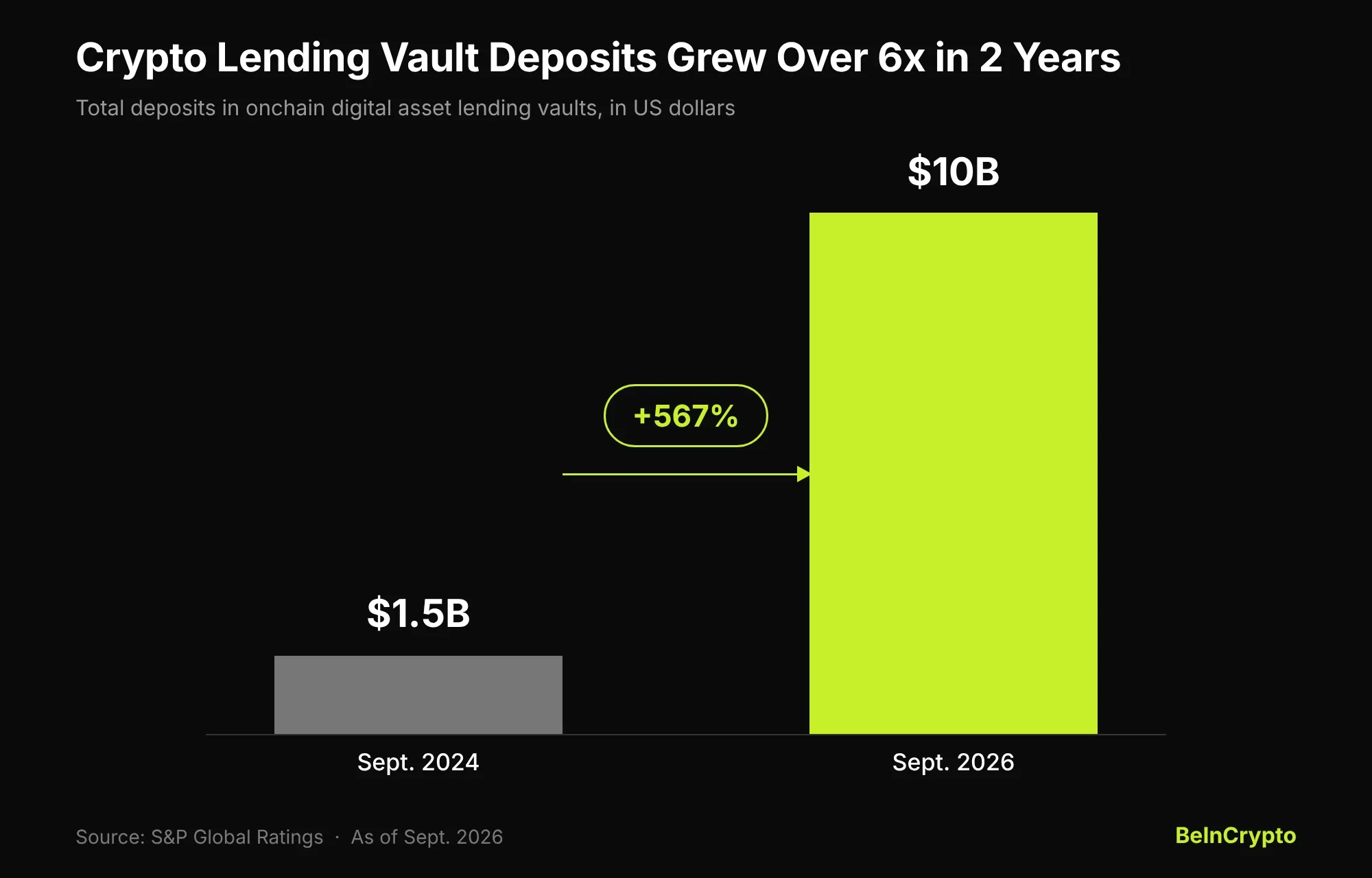
Crypto lending vaults deposits grew from $1.5 billion to $10 billion. Source: BeInCrypto
Curators are the firms that decide where a vault deploys its capital. As a result, their choices can decide whether depositors get their money back during a market shock.
For crypto lending vaults, each assessment gives a forward-looking view of how likely investors are to suffer losses, S&P says. It will not comment on the yields that vaults advertise.
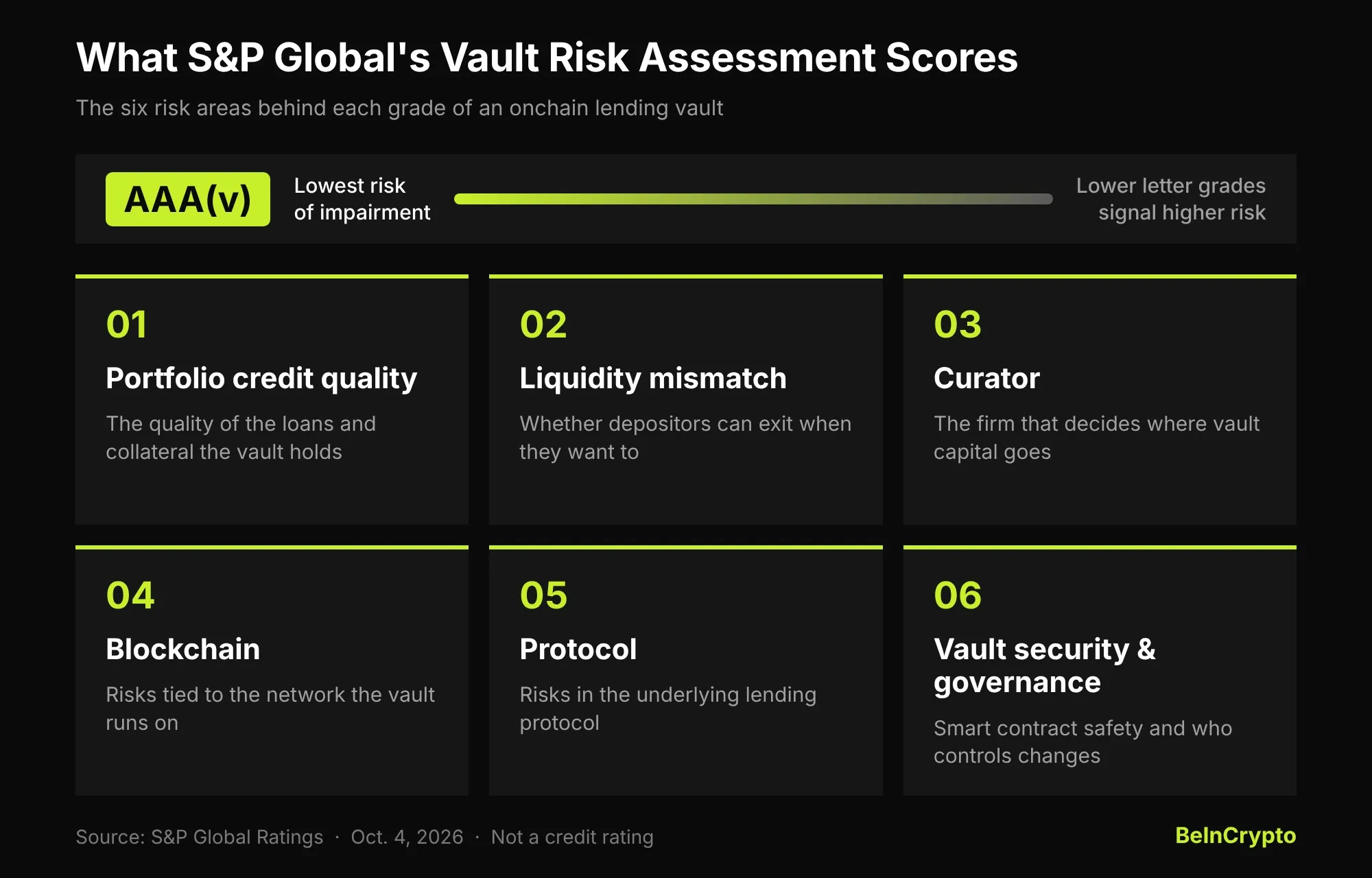
S&P Global risk factors for crypto lending vaults. Source: BeInCrypto
James Wiemken, head of global ratings services at S&P Global Ratings, pointed to uneven reporting across the sector.
Sponsored
Sponsored
“…the inherent complexities and varying disclosure standards in this nascent market create a clear need for a standardized, independent risk perspective,” James Wiemken, said
Why Wall Street Wants a Say in DeFi Risk
The VRA extends a wider push by S&P into digital assets. In September, the firm agreed to acquire auditor OpenZeppelin and took a stake in data provider Kaiko.
Earlier, the company said it issued the first credit rating for a Decentralized Finance (DeFi) protocol, Sky Protocol, formerly MakerDAO. Another S&P rating covered a structured finance deal backed by Bitcoin.
Meanwhile, vault risks have already turned into real losses. In August, a Term Labs governance exploit drained roughly $8.5 million from its vaults.
Regulators have taken notice. In July, Securities and Exchange Commission (SEC) Commissioner Hester Peirce warned that crypto vaults and lending protocols may fall under federal securities law.
Independent grades could make crypto lending vaults easier to pitch to banks and funds that require third-party risk checks. Therefore, the real test is whether curators start competing on S&P scores rather than headline yields.