






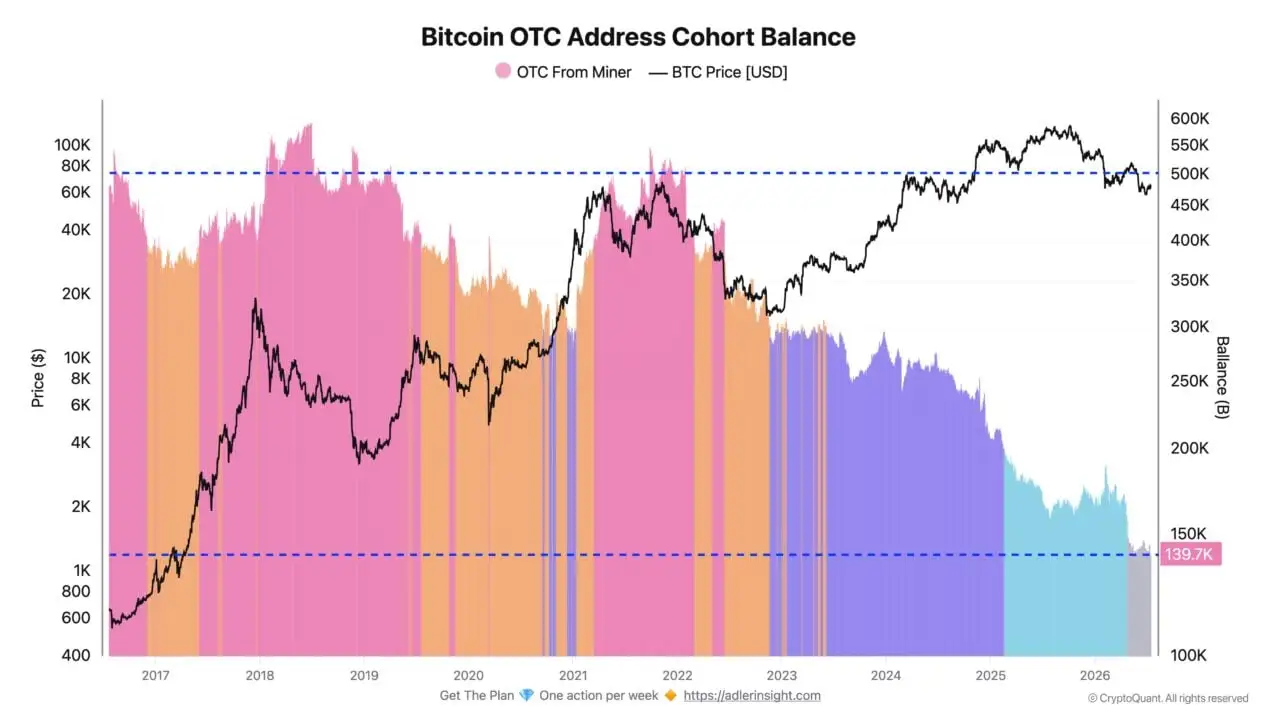
Bitcoins miner-linked over-the-counter [OTC] balances continue shrinking. That means – fewer coins remain available for large private transactions.
Since November 2021, holdings have dropped from 500,000 $BTC to 139,700 $BTC, a decline of nearly 72%. Miners drew down their inventory over time without meaningfully rebuilding it after the 2024 halving.
Source: CryptoQuant
As a result, OTC supply tightened while miner-to-exchange flows declined. Naturally, it suggested lower visible selling pressure on Bitcoin.
Meanwhile, Bitcoin‘s [$BTC] price has advanced despite declining OTC inventories, highlighting stronger demand against a shrinking pool of available supply. Yet, if institutions and whales continue accumulating under these conditions, tighter liquidity could amplify Bitcoin’s upside sensitivity in the coming quarters.
Bitcoin supply tightens beyond miner OTC desks
The tightening supply picture extends beyond miner-linked OTC desks and is now visible across centralized exchanges.
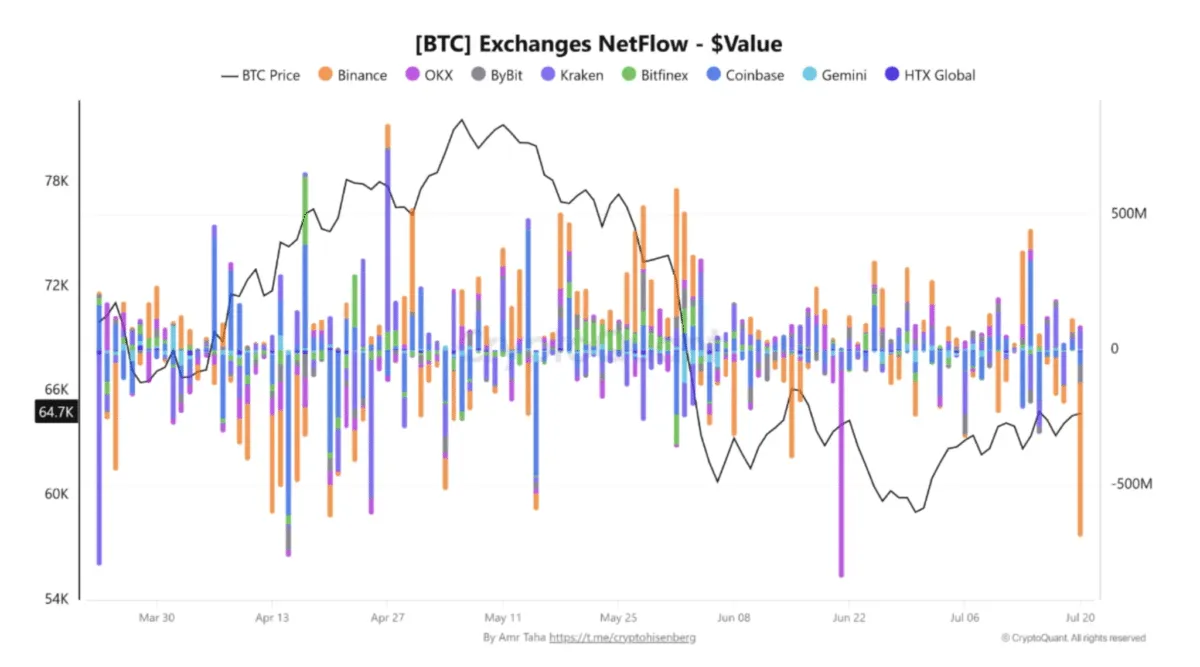
On the 20th of July, Bitcoin recorded $686 million in Exchange Netflows. By the way, Binance led with $570 million in net outflows, marking its largest withdrawal since April.
Source: CryptoQuant
Furthermore, Bybit contributed $65 million, Coinbase another $48 million, and HTX nearly $3 million.
Ultimately, it meant there were coordinated withdrawals rather than isolated activity. As more $BTC leaves exchange wallets, the pool of coins readily available for spot-market selling continues to shrink.
This trend complements declining OTC inventories, reinforcing a tighter market structure. If demand continues strengthening, reduced exchange liquidity could amplify Bitcoins upside sensitivity in the months ahead.
Are long-term holders selling?
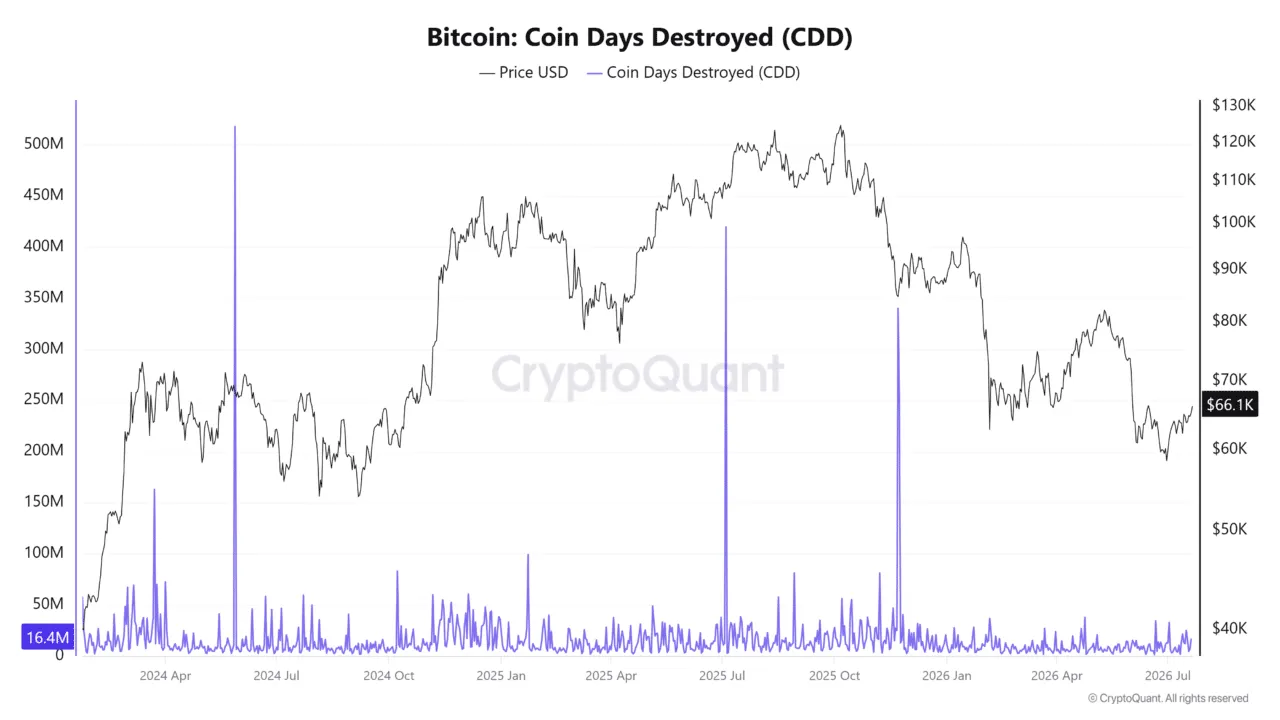
Even as Bitcoin rebounded from recent lows, long-term holders showed little interest in distributing older coins into the market. The trend of Coin Days Destroyed (CDD), which measures the number of days old coins are sold into circulation, remains flat at 16.4 million.
Source: CryptoQuant
Those brief increases failed to develop into sustained selling, suggesting most dormant holdings remained untouched despite changing market conditions. Therefore, it is likely that most of the older coins continue to remain unliquidated regardless of changes in the markets.
As older coins stay inactive, the burden of driving price discovery shifts toward fresh spot demand instead of recycled supply.
Thus, the next price movement for Bitcoin could potentially be driven by whether or not sufficient capital is available in the market. That demand must absorb the majority of the coins remaining within the increasingly smaller tradable float.
Final Summary
- Bitcoin [$BTC] tradable supply continues shrinking as sell-side liquidity remains constrained.
- Bitcoin needs stronger spot demand to unlock its tightening supply advantage.