The token's return to the psychological $2 mark is dragging on. The technical picture and the harsh math of coin supply point to a long sideways trend. The current macroeconomic model is squeezing the asset's potential, pushing the timeline for a real assault on key levels to the 2028 horizon.
According to TradingView data, the weekly XRP/USD chart has entered a phase of extreme Bollinger Band compression. Quotes have frozen at $1.3110, running into a dense resistance block in the $1.37–$1.40 range.
The indicator's middle line (20-week SMA) at $1.2514 is currently holding a local floor, while the upper band runs at $1.5997.
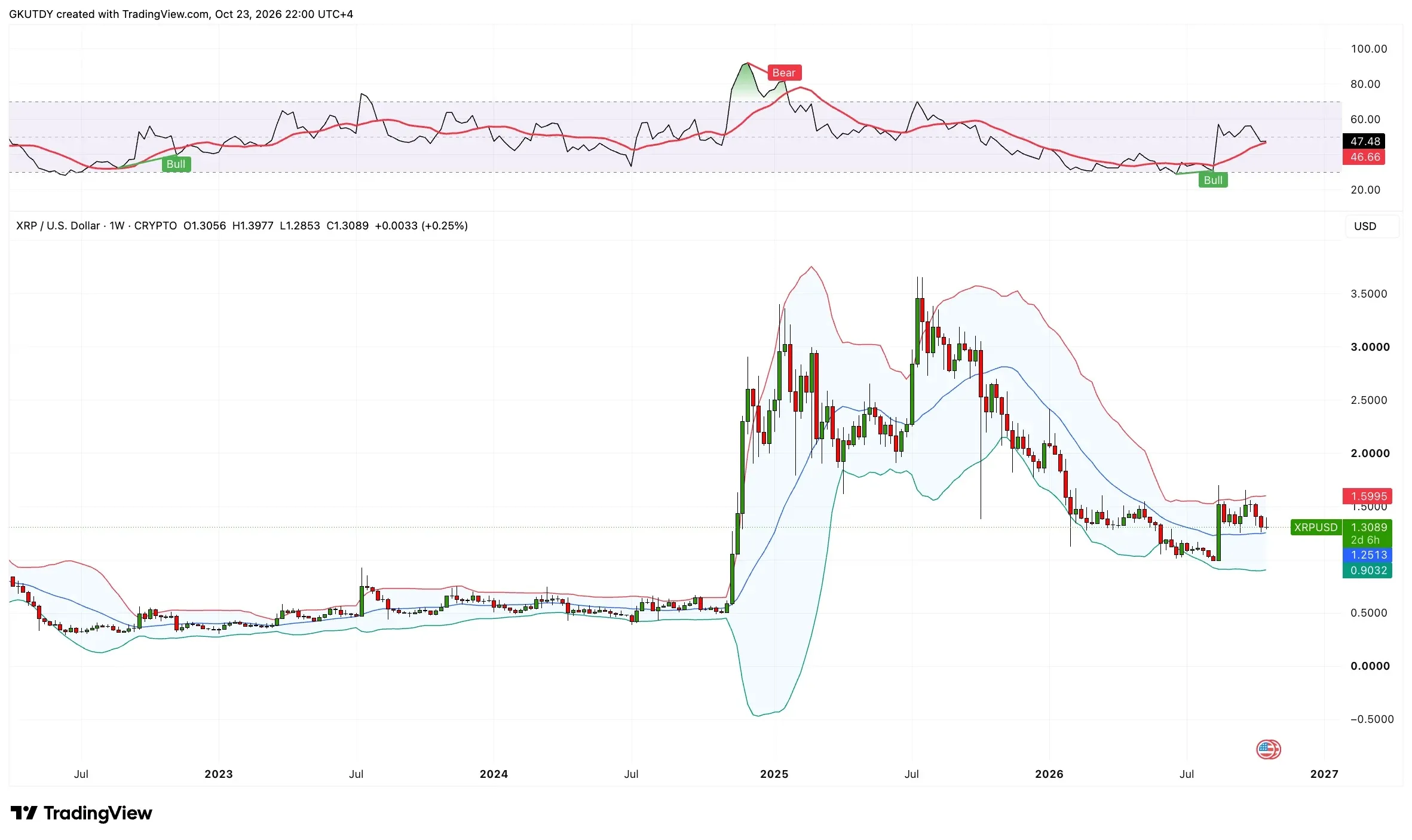
Weekly XRP/USD price chart showing Bollinger Bands squeeze, Source: TradingView
The current chart structure fully duplicates the prolonged accumulation cycle of 2022–2024. Prediction platforms, including Polymarket, estimate the chances of a breakout to $2 this month at only 10%. The indicator's math warns that in order to fully digest the current supply, the market will need a prolonged consolidation phase.
Why everything is great for Ripple, but not for XRP
The sleepy price chart sharply diverges from the powerful development of the project's distributed infrastructure — both Ripple and XRP Ledger. By October 2026, the network had reached peak fundamental form in three areas: the legal status of a digital commodity in the U.S. fully removed regulatory risks for banks; the integration of Ripple's RLUSD stablecoin into payment corridors organically accelerated native gas burn volumes; and the XLS-66 amendment and built-in AMM turned the blockchain into a full-fledged DeFi ecosystem.
The main brake on the spot price remains the escrow account mechanism. On the first day of every month, Ripple unlocks 1 billion tokens. About 80% of this volume is dutifully returned to lockup, but the remaining 200–300 million coins go to institutional partners every month via over-the-counter (OTC) deals.
This steady inflow of supply against the backdrop of tight Fed rates deprives the retail market of the strength for a quick takeoff.
Only four factors are capable of pulling the price off its two-year brake and breaking this suspended animation:
- Institutional shortage on the OTC market: If bank demand exceeds the scheduled escrow volumes, buyers will be forced to enter open exchanges, which will instantly break through the upper Bollinger Band.
- Capitulation of the U.S. Fed: A cut in interest rates will trigger a flow of capital from government bonds back into crypto assets with clear legal status, where this token holds a leading position.
- Explosive launch of lending pools in DeFi: The full deployment of the XLS-66 amendment will force large funds to lock billions of coins in smart contracts for the sake of yield, which will sharply reduce their free circulation.
- Large-scale integration of RLUSD by banks: If the new stablecoin becomes a basic tool for transnational corridors, fee burn volumes will grow hundreds of times, creating deflationary pressure.
The implementation of any of these scenarios could forcibly interrupt the prolonged flat. But until macroeconomic triggers or a shortage on the OTC market outweigh the scheduled pressure of the escrow accounts, the bulls will have to adapt their strategies to the conditions of a long wait.