






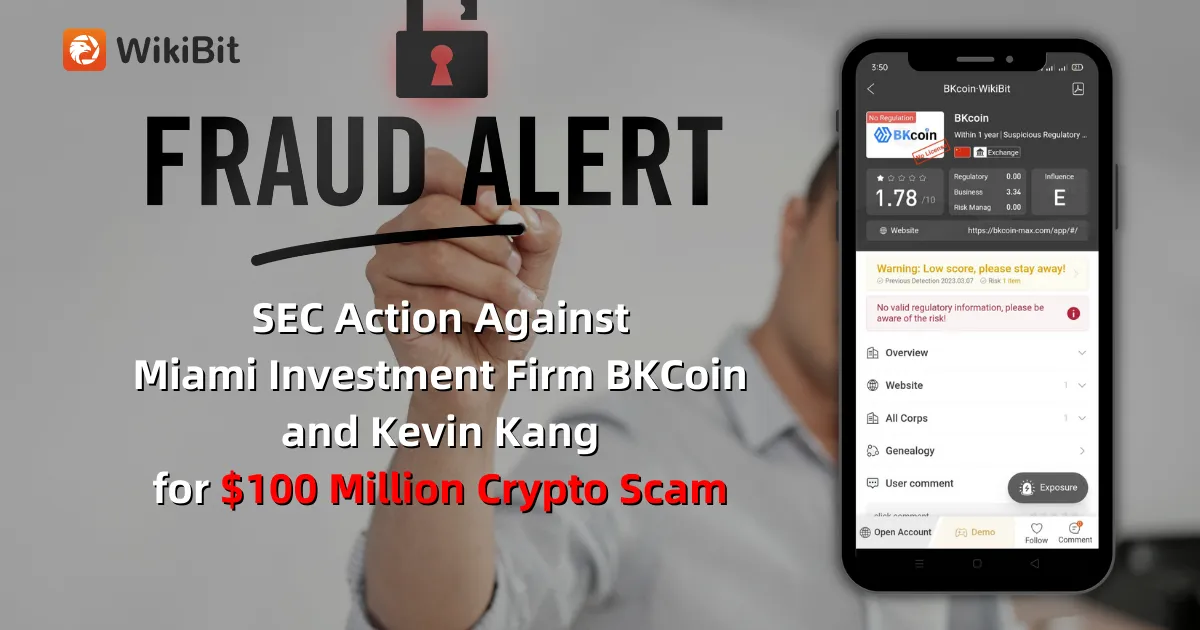
The Securities and Exchange Commission (SEC) has taken emergency action against BKCoin Management LLC, an investment adviser based in Miami, and one of its principals, Kevin Kang, in connection with a cryptocurrency fraud scheme. The SEC has successfully obtained an asset freeze, appointment of a receiver, and other emergency relief against the defendants.
According to the SECs complaint, BKCoin raised approximately $100 million from at least 55 investors between October 2018 and September 2022, promising to invest in cryptocurrency assets. However, instead of investing the money as promised, the defendants used some of the funds to make Ponzi-like payments and for personal use.
The complaint alleges that BKCoin and Kang disregarded the structure of the funds, commingled investor assets, and used more than $3.6 million to make Ponzi-like payments to fund investors. Kang also allegedly misappropriated at least $371,000 of investor money for personal use, including vacations, sporting events tickets, and a New York City apartment. The complaint further alleges that Kang attempted to conceal the unauthorized use of investor money by providing altered documents with inflated bank account balances to the third-party administrator for certain of the funds.
Moreover, the defendants allegedly misrepresented to some investors that BKCoin, or one of the funds, received an audit opinion from a “top four auditor,” when in fact neither BKCoin nor any of the funds received an audit opinion at any time.
Eric I. Bustillo, Director of the SECs Miami Regional Office, said that the defendants “misappropriated their money, created false documents, and even engaged in Ponzi-like conduct.” Bustillo emphasized that the SEC is committed to protecting investors and rooting out fraud in all securities sectors, including the cryptocurrency arena.
The SECs complaint, filed in the United States District Court for the Southern District of Florida, alleges that BKCoin and Kang violated the antifraud provisions of the federal securities laws. The complaint seeks permanent injunctions against both of the defendants; disgorgement, prejudgment interest, and a civil penalty from both of the defendants; and, an officer and director bar and conduct-based injunction against Kang.
In addition, the complaint names relief defendants, and seeks disgorgement from, each of the funds and Bison Digital LLC, an entity that allegedly received approximately $12 million from BKCoin and the funds. The court also granted emergency relief against the relief defendants, including the appointment of a receiver.
The SEC‘s investigation is ongoing and is being conducted by Alexander Charap, Jeffrey Goldberg, and Julia D’Antonio in the Miami Regional Office under the supervision of Jessica M. Weissman, Fernando Torres, and Glenn S. Gordon with assistance from Adrian Gonzalez, James Richardson, and Jean Cabot. The SECs litigation is being led by Pascale Guerrier under the supervision of Teresa Verges.

As a reminder, WikiBit is ready to help you search the qualifications and reputation of projects in a bid to protect you from hidden dangers in this risky industry!
iOS: t.ly/UUCj
Android: t.ly/cfYt