






Bond yields pulled back last week, with the 10-year Treasury yield down 14.6 basis points. Fidelitys Jurrien Timmer says a range may be forming, but he blames sticky inflation and fiscal risk for the climb.
Still, the drop followed a hotter Consumer Price Index (CPI) reading, with annual inflation at 3.7% against 3.6% expected. The Federal Reserve (Fed) meets October 27-28, when it will decide whether to raise rates again.
Sponsored

Sponsored
Why Timmer Thinks the Bond Yields Story Is Too Neat
Timmer rejects the tidy version of events, he wrote on X. In that version, growth lifted yields and AI capital spending (capex) worries pulled them down.
His explanation is broader.
“in my view the rise in yields this year has been multi-factorial, including sticky structural inflation and mounting fiscal risk.”
Jurrien Timmer, Director of Global Macro at Fidelity Investments, in a post
The 10-year yield briefly touched 5.33% after the October 14 report, XTB Research data shows. Core CPI, which strips out food and energy, rose 2.6% annually against 2.5% expected.
Sponsored
Sponsored
Then yields reversed. The reversal was called it the largest weekly decline in seven months. Investors sought safety in Treasuries during a chip stock sell-off tied to AI spending doubts.
Can Yields Settle While the Pressures Behind Them Stay Put?
Markets now see little chance of a hike. CME Groups FedWatch, which tracks futures pricing, put the odds at 17.2% on Monday, down from 57.6% a month earlier.
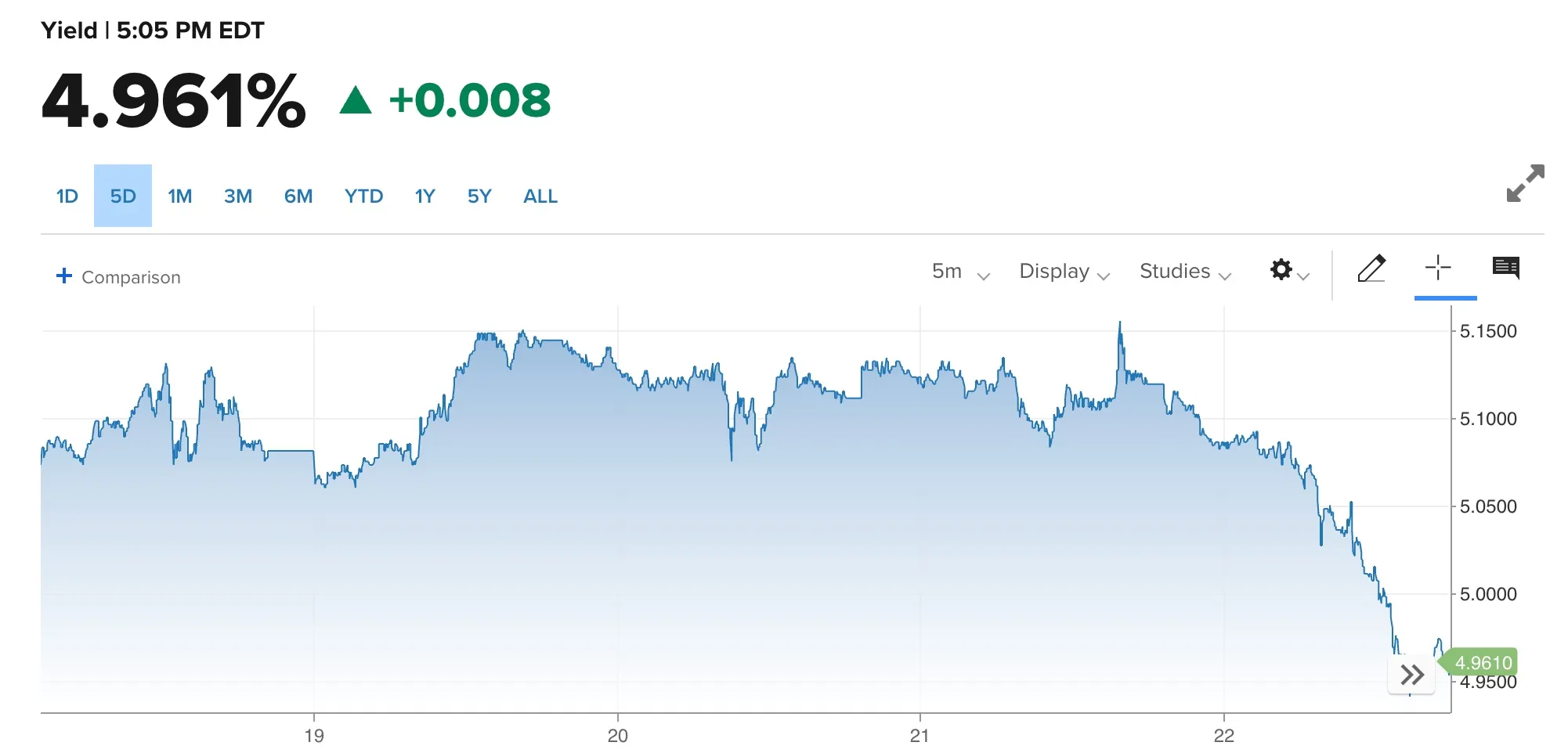
10-year Treasury Yield is under 5%. Source: CNBC
However, officials have not shut the door. New York Fed President John Williams still expects one more rate hike this year.
Bank of America is holding its October hike call too, though economist Aditya Bhave described his conviction as low.
The 10-year breakeven rate, drawn from inflation-protected Treasuries, sat near 2.36% on Monday, Reuters data shows. That implies average inflation of about 2.4% a year for the next decade.
That mix could keep stocks and crypto sensitive to AI spending headlines as well as inflation prints.